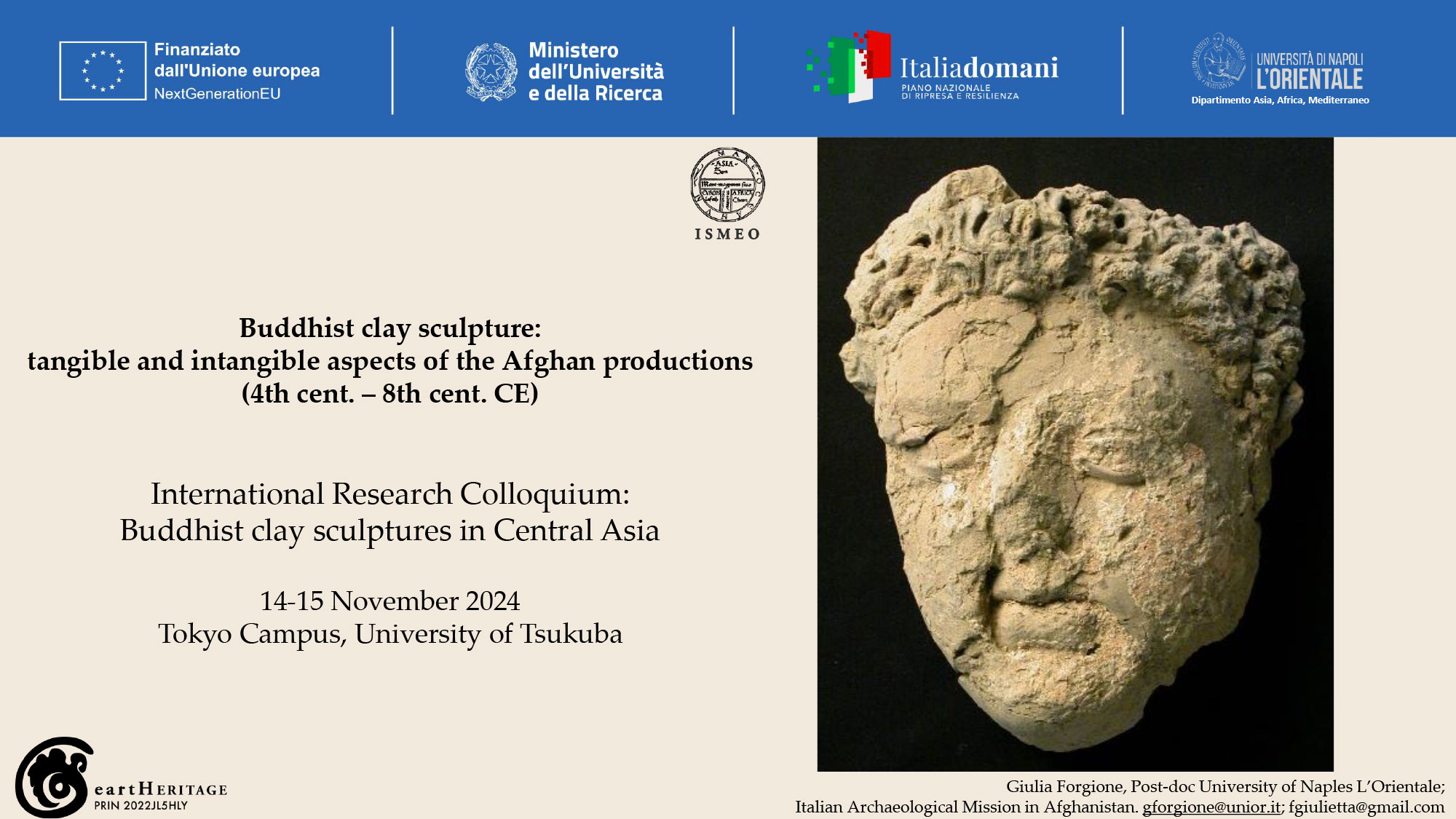
Abstract: The paper focuses on the techniques and materials of the Buddhist clay sculpture, starting from the key sites of Tepe Narenj and Tapa Sardar. These contexts are central from a documentation perspective, as they provide important, partly unpublished evidence that significantly expands current knowledge. Building on these case studies, the analysis extends to comparisons with other sites and with what is known about construction practices. This comparative approach reveals a varied and articulated picture of production, highlighting a wide range of technical solutions. These findings add complexity to the overall framework and encourage not only the need to maintain an open-minded approach, but also the necessity of adopting more appropriate technical terminology.