
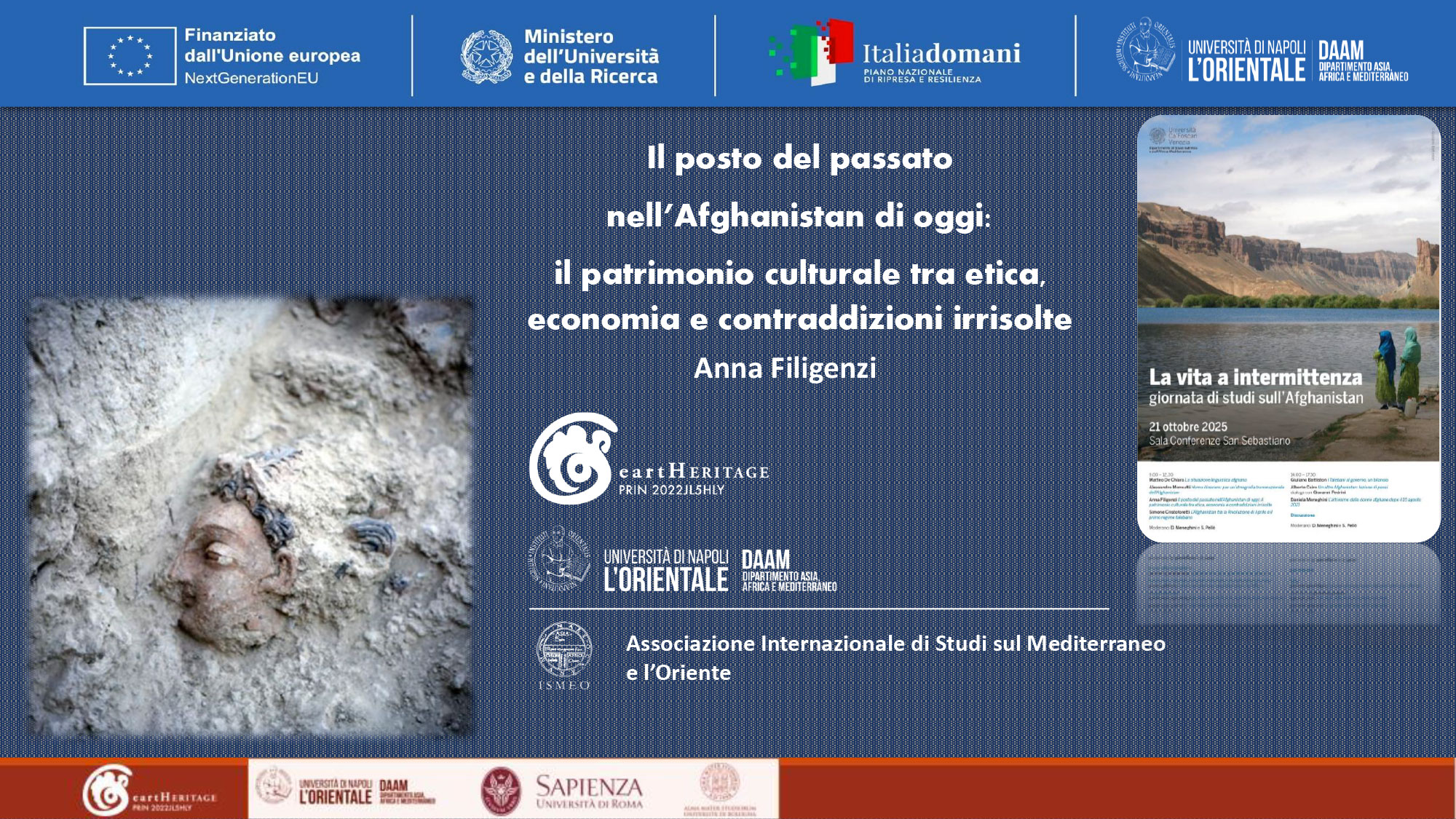
Abstract: All’inizio degli anni 2000, dopo gli anni di guerra civile e la caduta del primo regime talebano, l’Afghanistan ha vissuto una breve illusione di ricostruzione, pacificazione dei conflitti e progresso economico e sociale. Già dal 2005, in particolare in alcune zone (tra cui Ghazni, dove sono tradizionalmente basate le attività principali della Missione Archeologica Italiana in Afghanistan) e poi, progressivamente e a macchia di leopardo, in altre aree del paese, azioni terroristiche di vario segno e con diversi obiettivi hanno sortito l’effetto di minare le condizioni di sicurezza e stabilità necessarie allo sviluppo di progetti a medio e lungo termine, tra cui quelli legati alla conservazione e valorizzazione del patrimonio culturale. Quando si lavora, ad uno scavo o ad un restauro, lo si fa con una fretta e un’approssimazione che indeboliscono o addirittura annullano il livello scientifico dei risultati, ponendo un problema etico fondamentale sull’opportunità di varare progetti di questo tipo in assenza di condizioni adatte. Tuttavia, non solo la filiera dei beni culturali, fatta di competenze e luoghi deputati, è oggi perfino più fragile e lacunosa che in passato, ma la gravità e la portata dei problemi che affliggono il paese rendono difficilissimo trovare uno spazio di consenso sufficientemente ampio in cui inserire la difesa del patrimonio culturale. E infine, a noi che di patrimonio culturale ci occupiamo, si impone forse una riflessione sulla necessità di trovare parole nuove e un senso nuovo per concetti chiave che ad esso solitamente associamo, quali ad esempio “identità”, con la consapevolezza che è proprio in essi che, per convinzione o per opportunismo, si insediano le incomprensioni e i conflitti più radicati.
In the early 2000s, after years of civil war and the fall of the first Taliban regime, Afghanistan experienced a brief illusion of reconstruction, conflict resolution and economic and social progress. As early as 2005, particularly in some areas (including Ghazni, where the main activities of the Italian Archaeological Mission in Afghanistan are traditionally based) and then, progressively and sporadically, in other parts of the country, terrorist acts of various kinds and with different objectives have had the effect of undermining the security and stability necessary for the development of medium- and long-term projects, including those related to the conservation and enhancement of cultural heritage.
When work is carried out, whether on an excavation or a restoration, it is done with a haste and a lack of rigour that weaken or even nullify the scientific reliability of the results, raising a fundamental ethical question regarding the advisability of launching projects of this kind in the absence of suitable conditions. However, not only is the cultural heritage sector – comprising specialist expertise and dedicated institutions – now even more fragile and fragmented than in the past, but the severity and scale of the problems afflicting the country make it extremely difficult to find a sufficiently broad consensus in which to place the care for cultural heritage. And finally, for those of us who work in the field of cultural heritage, we are perhaps compelled to reflect on the need to find new words and a new meaning for key concepts we usually associate with it, such as ‘identity’, since it is precisely within these concepts that, whether out of conviction or opportunism, the most profound misunderstandings and conflicts take root.