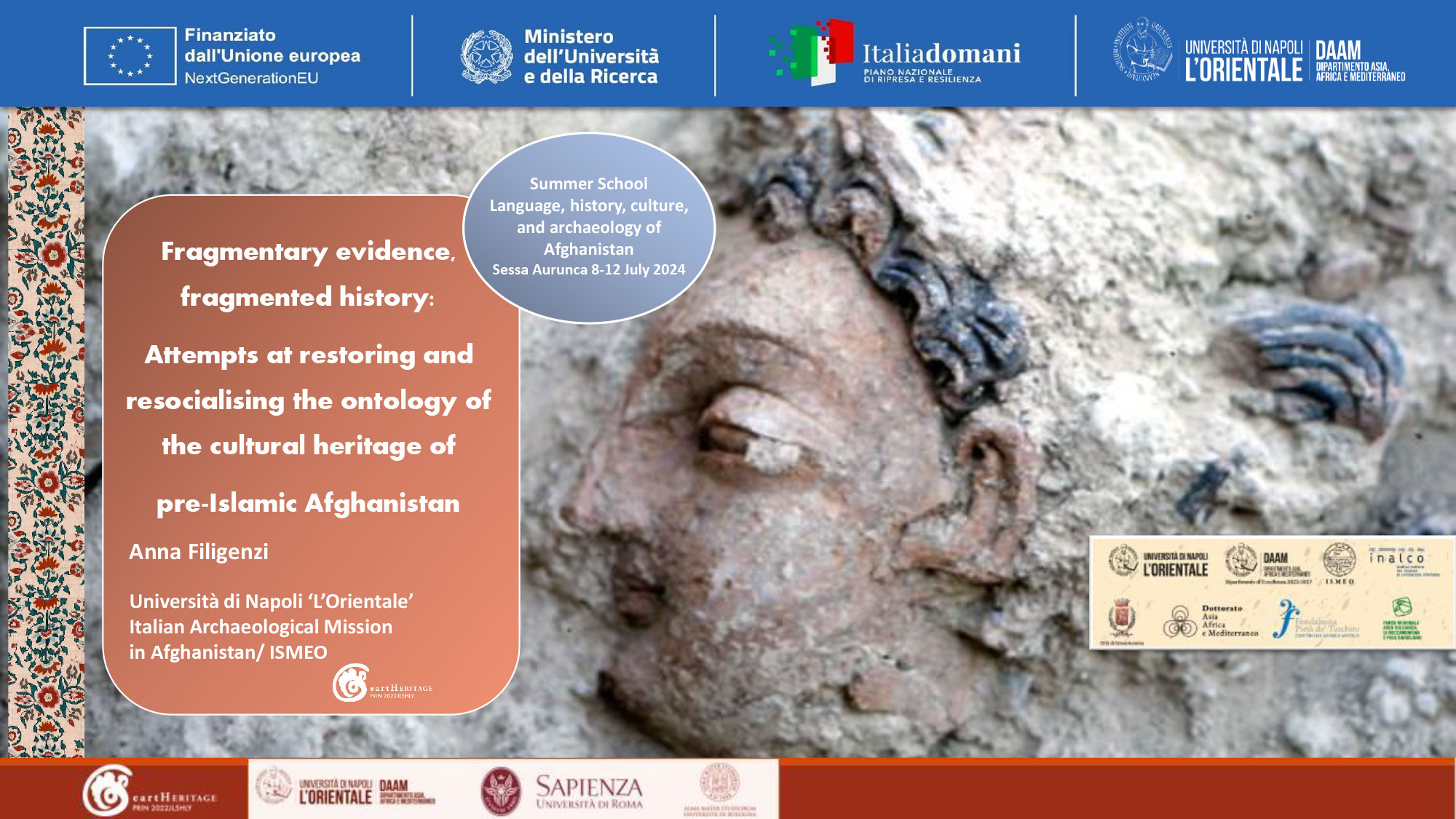
Abstract: The presentation discusses the scarce representativeness of the pre-Islamic cultural heritage of Afghanistan, due to several reasons, such as the insufficient archaeological sources, the perishable nature of material evidence, the paucity of written sources (almost external, with the exception of few epigraphic documents), the still problematic assessment of numismatic evidence, and a process of historical research almost based on uneven distribution and “cultural weight” of the available materials. This results in an unbalanced narrative, where many cultural assets are missing or misperceived. And yet, understanding objects in their context and reconstructing their original forms, history and meanings is not only a scientific endeavour, but also a way to support the reconnection of the civil society ‒ the first and legitimate owner of cultural property ‒ with its past. With this aim in mind, the Italian Archaeological Mission in Afghanistan, now also within the framework of the PRIN Project 2022JL5HLY eartHeritage, is committed to: spreading knowledge about the Afghan cultural heritage; promoting its recognition as a precious communal asset; promoting its respect and safeguarding; help young Afghan generations to reconnect with it.