
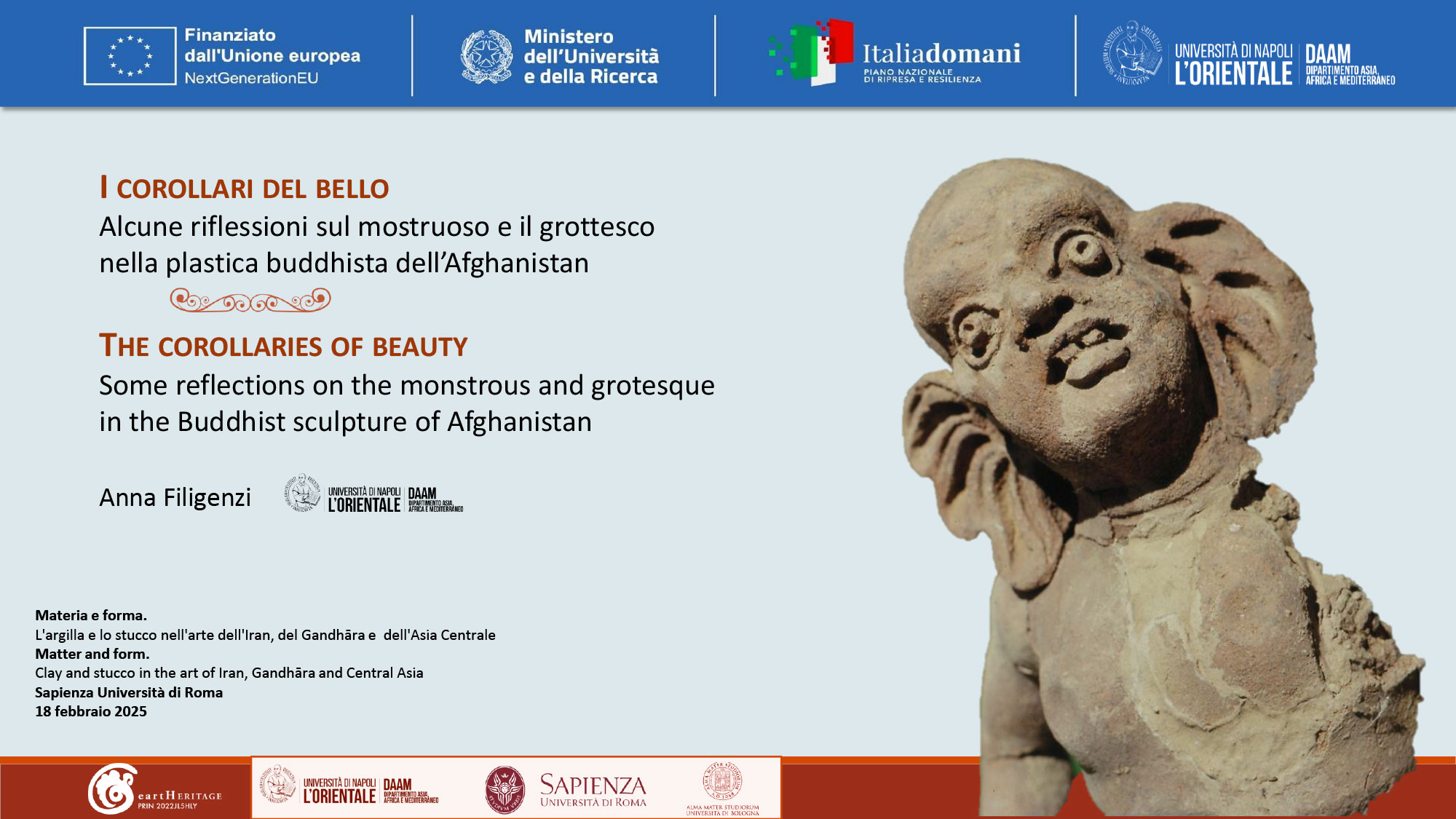
Abstract: La letteratura e le arti visive ci forniscono materia sufficiente per indagare lo stretto rapporto che il buddhismo stabilisce tra bellezza fisica e bellezza morale. Nella visione karmica, che si dispiega nel tempo dilatato di vite multiple, la pratica delle virtù ha un potere trasformativo sulla complessione fisica. Lo stesso corpo del Buddha, di vita in vita, diviene più bello, più forte, più sano. La sua bellezza è testimonianza non falsificabile dei traguardi spirituali raggiunti, ma allo stesso tempo anche uno strumento cognitivo, di conversione e ispirazione, che agisce sull’osservatore suscitando un desiderio sincero di emulazione. Dalla concezione normativa del “corpo virtuoso” per eccellenza ‒ ovvero quello del Buddha ‒ e della sua bellezza nascono, per opposizione, i corollari di anomalie in cui si manifestano gli effetti karmici di errori passati, ma anche una vasta gamma di “corpi virtuosi” che si pongono all’interno di una scala differenziata di meriti. In questo contributo, si tenterà di rintracciare i riflessi di tali nozioni sulla produzione artistica afghana, che per la sua lunga continuità temporale consente di osservare anche i mutamenti dei codici estetici e dei repertori iconografici attraverso i quali esse prendevano forma, intrecciandosi con vecchi e nuovi paradigmi culturali.
Literature and the visual arts provide us with sufficient material to investigate the close relationship that Buddhism establishes between physical beauty and moral beauty. In the karmic vision, which unfolds in the measureless time of multiple lives, the practice of virtues has transformative effects on the physical complexion. The Buddha’s own body, from life to life, becomes more beautiful, stronger, healthier. Its beauty is an unfalsifiable testimony of spiritual achievements and, at the same time, a cognitive tool that converts and inspires, by arousing in the observer a sincere desire to emulate. From the normative conception of the ‘virtuous body’ par excellence – i.e. that of the Buddha – and its beauty arise, by way of opposition, the corollaries of anomalies that reflect the karmic effects of past errors, but also a wide range of ‘virtuous bodies’ that are placed within a differentiated scale of merits. In this contribution, an attempt will be made to trace the reverberations of such notions in Afghan artistic production, which, due to its centuries-long continuity, also allows us to observe the changes in the aesthetic codes and iconographic repertoires through which they took shape, intertwining with old and new cultural paradigms.