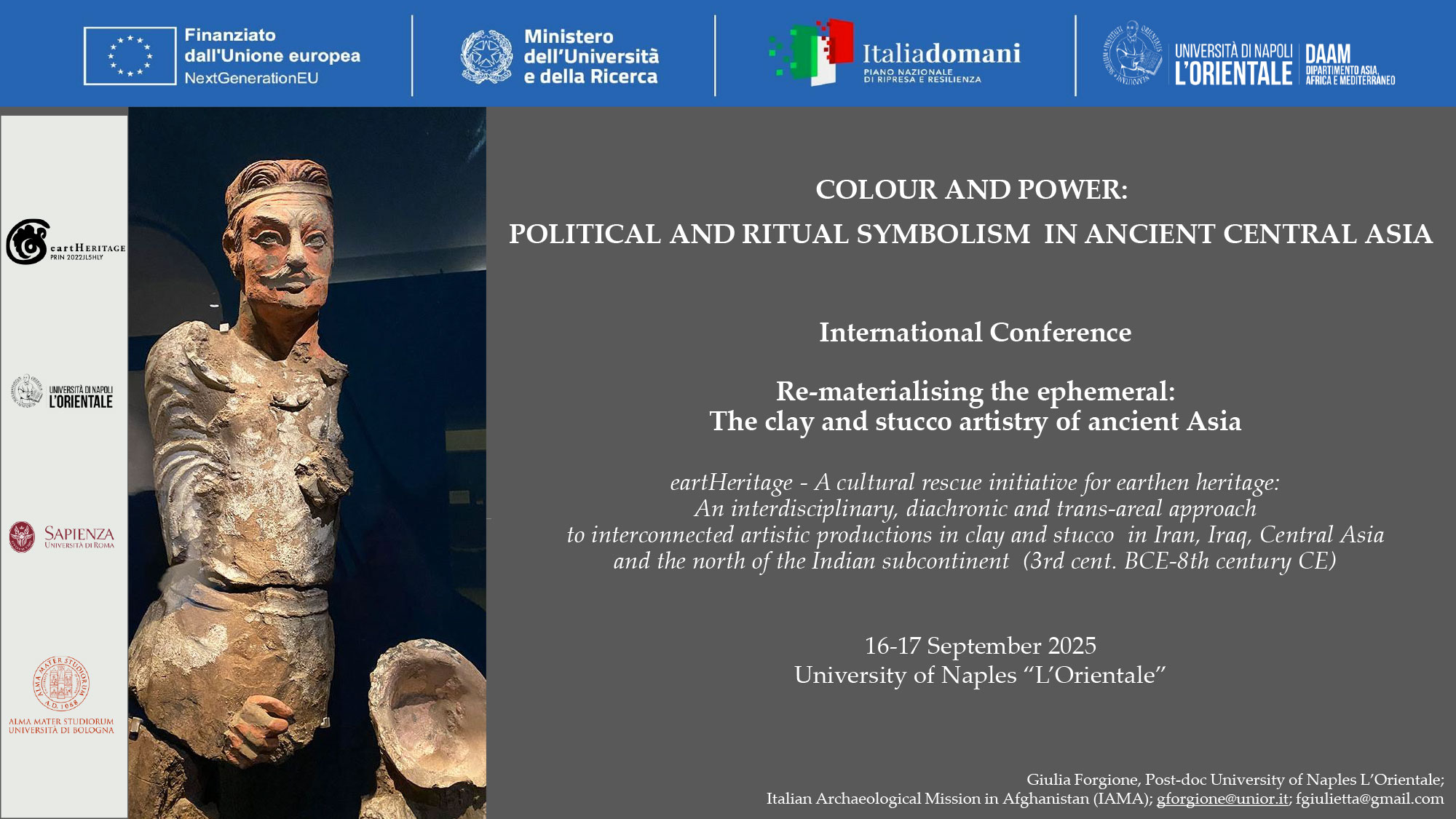
Abstract: This contribution provides a preliminary investigation into the visual strategies employed by the ruling elite in Central Asia, approximately from the 1st to the 8th century CE. Despite the fragmentary nature of the archaeological record—exacerbated by the use of perishable materials and a scarcity of scientific excavations—this study aims to explore how aristocratic figures were visually constructed to convey power, legitimacy and identity. The starting point for our inquiry will be the well-known and much debated frieze from Khalchayan (southern Uzbekistan). Variously dated from the Yuezhi period to as late as the early or middle Kushan period (1st cent BCE-mid-2nd cent. CE), the frieze has been subject to different interpretations, which nonetheless agree on its dynastic commemorative character. A close examination of stylistic and chromatic features, especially skin tone, reveals a symbolic use of polychromy as a narrative tool rather than a naturalistic choice. Through visual comparison with sculptures and wall paintings from other sites, among which Dalverzin Tepe, Ajina Tepa, Dilberjin, Tapa Sardar, Tepe Narenj, this article tentatively explores, in a diachronic perspective, the differentiation between secular dynastic imagery (of political legitimation) and images of spiritual authority as well as between masculinity and femininity. Although limitations in the material record and chronological data prevent definitive conclusions, the study underscores the importance of colour, iconographic codes, and spatial context in the articulation of aristocratic self-representation in Central Asia through most of the 1st millennium CE.