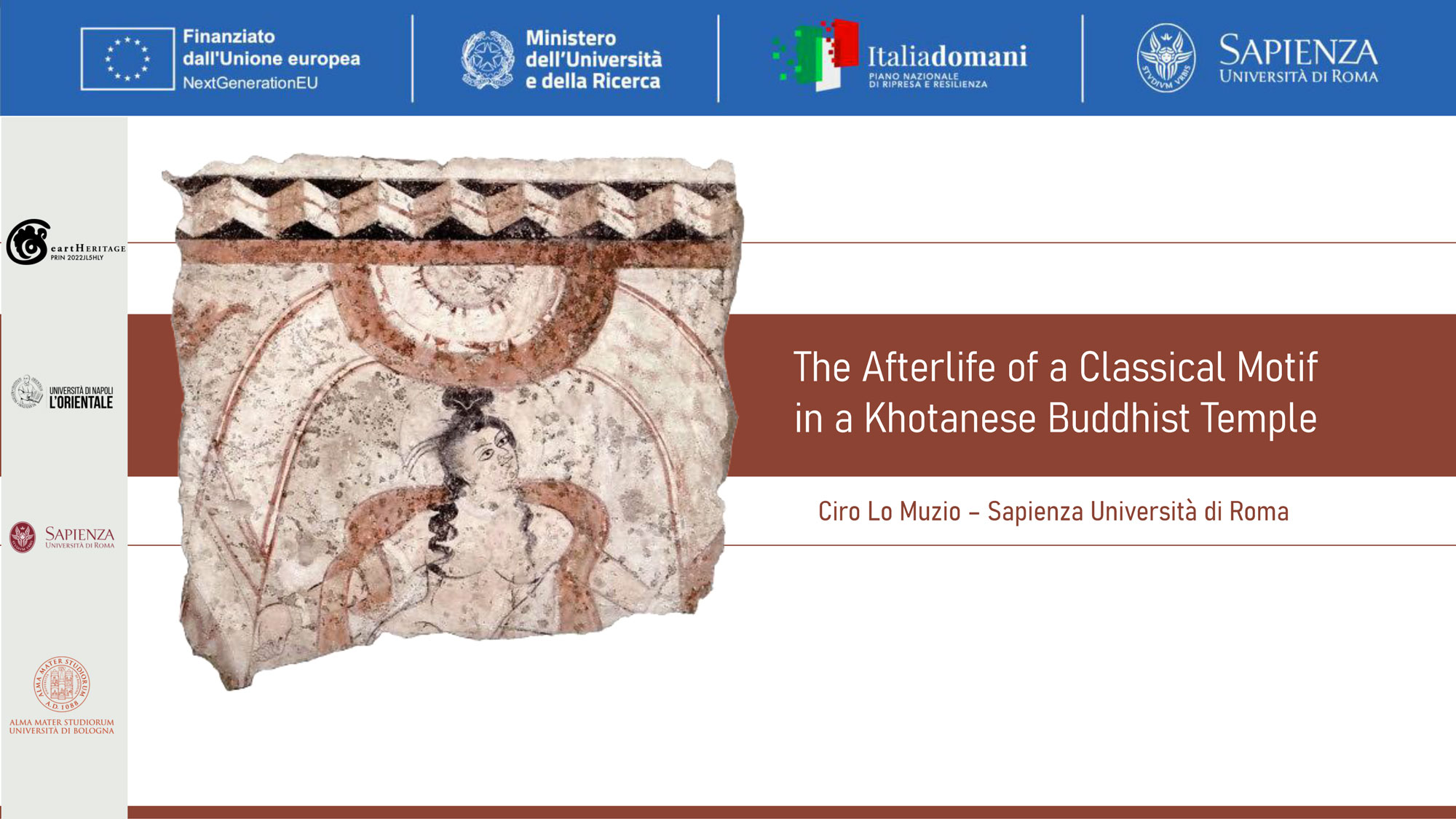
Abstract: This paper presents the results of a study devoted to a group of mural fragments depicting Erotes supporting a garland, unearthed in a Buddhist temple in the Khotan oasis. After outlining the circumstances of the discovery and the architectural and pictorial context of the site, the analysis focuses on the formal and iconographic features of the figures, considered in relation to comparable representations in Gandhāran art and to earlier Greco-Roman models mediated through Gandhāra. Particular attention is paid to compositional schemes, attributes, and stylistic details, in order to assess the degree of continuity and transformation involved in the transmission of the motif. On this basis, the paper discusses issues of artistic context and chronology, engaging with previous proposals for the dating of the Yalangan murals and re-evaluating the evidence provided by the fragments themselves. Rather than offering a comprehensive interpretation, the contribution aims to clarify the material, iconographic, and chronological framework within which the afterlife of a Gandhāran motif can be traced in the Buddhist painting of the Tarim Basin.