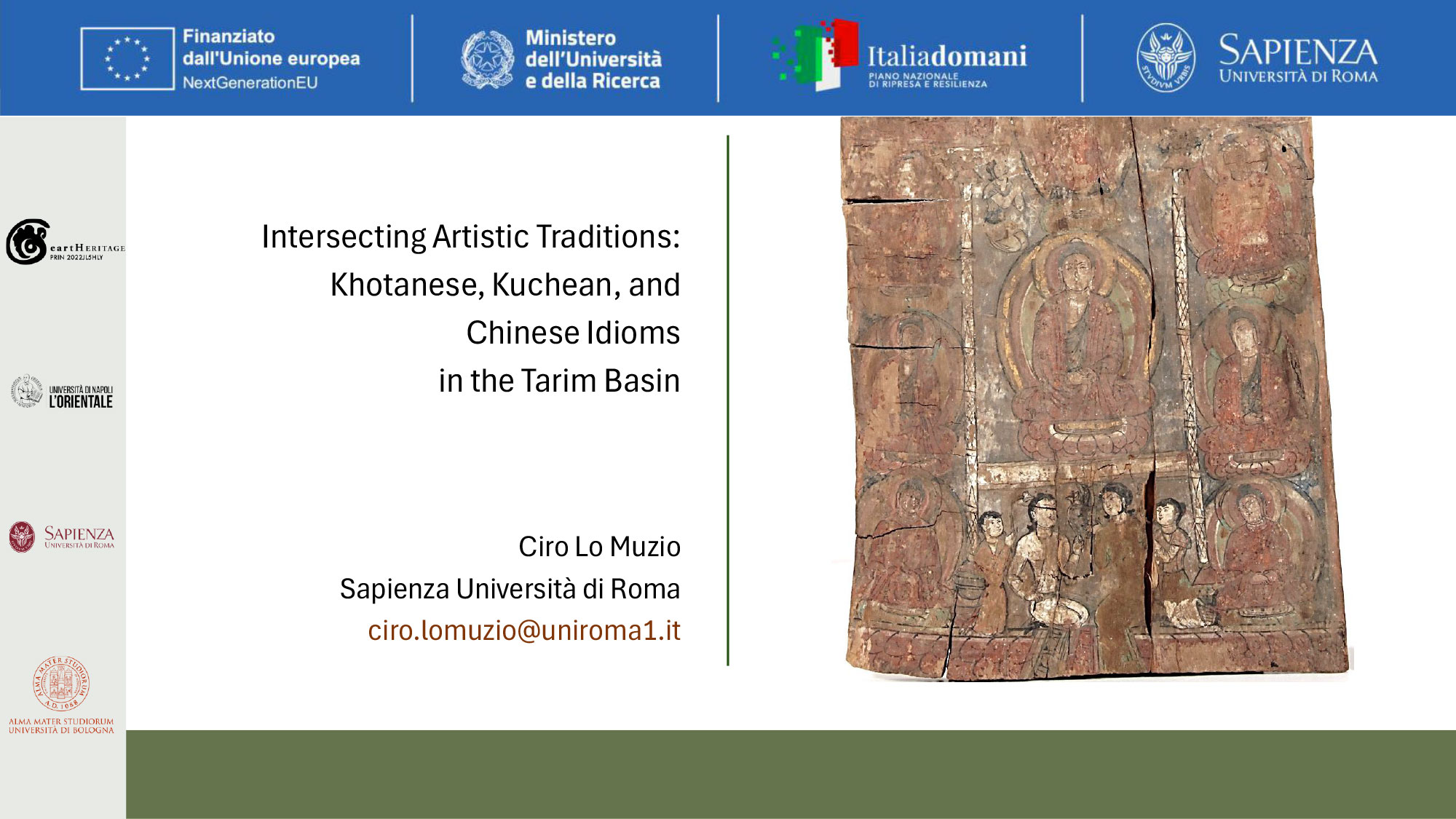
Abstract: The artistic relationship between the ancient oases of Khotan and Kucha, located on the southern and northern edges of the Takla Makan (Tarim Basin, Xinjiang), has received limited scholarly attention. Differences in their doctrinal orientations and the distinctive archaeological features of their Buddhist settlements may have discouraged deeper investigation. However, recent studies on this topic have yielded promising results. This paper aims to contribute to the discussion by examining a relatively understudied artefact: a painted wooden panel from Kizil (Kucha), most likely dating from the latest phase of the site (mid-7th century CE or later). After a description of the composition depicted on the panel, the paper addresses the uneasy question of the subject it was possibly meant to represent, then it focuses on some specific elements providing iconographic and stylistic evidence of cultural interaction between the Kucha and Khotan oases, as well as the assimilation of distinct Chinese feature, which could inspire further research on the subject.