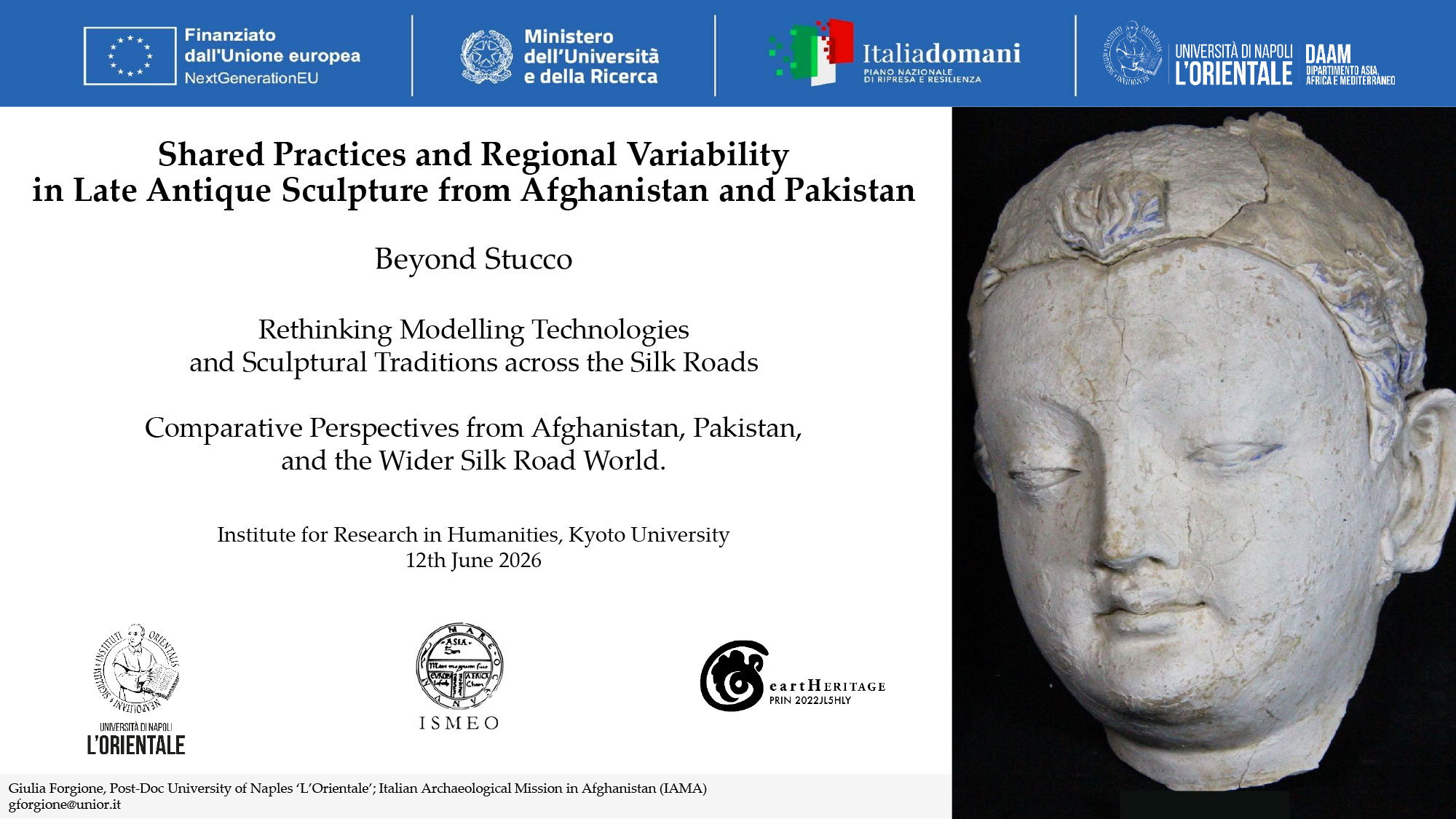
Abstract: This paper examines the technical production of Late Antique Buddhist sculpture (4th–8th centuries CE) across a selection of sites in Afghanistan and Pakistan, with particular attention to the Kabul region, Hadda, and Swat. The study focuses on two major sculptural traditions: lime-stucco productions and clay-based sculptures consisting of clay cores covered with gypsum-based coatings. Drawing on archaeological documentation and archaeometric analyses, the paper investigates workshop practices, material choices, and regional technological traditions. Particular attention is devoted to the use of textiles within the modelling process. The exceptionally well-preserved material from Tepe Narenj provides rare evidence for their use and allows a reassessment of their technical role in the production of composite sculptures combining clay and gypsum. The comparison between Tepe Narenj, Guldara, Hadda, Taxila, and Butkara I reveals significant regional variations in materials and manufacturing techniques. More broadly, the paper argues that Buddhist sculptural production in Late Antique Afghanistan and Pakistan was characterized by a flexible technical landscape in which clay, gypsum, and lime were combined in different ways according to local practices, material availability, and workshop traditions.