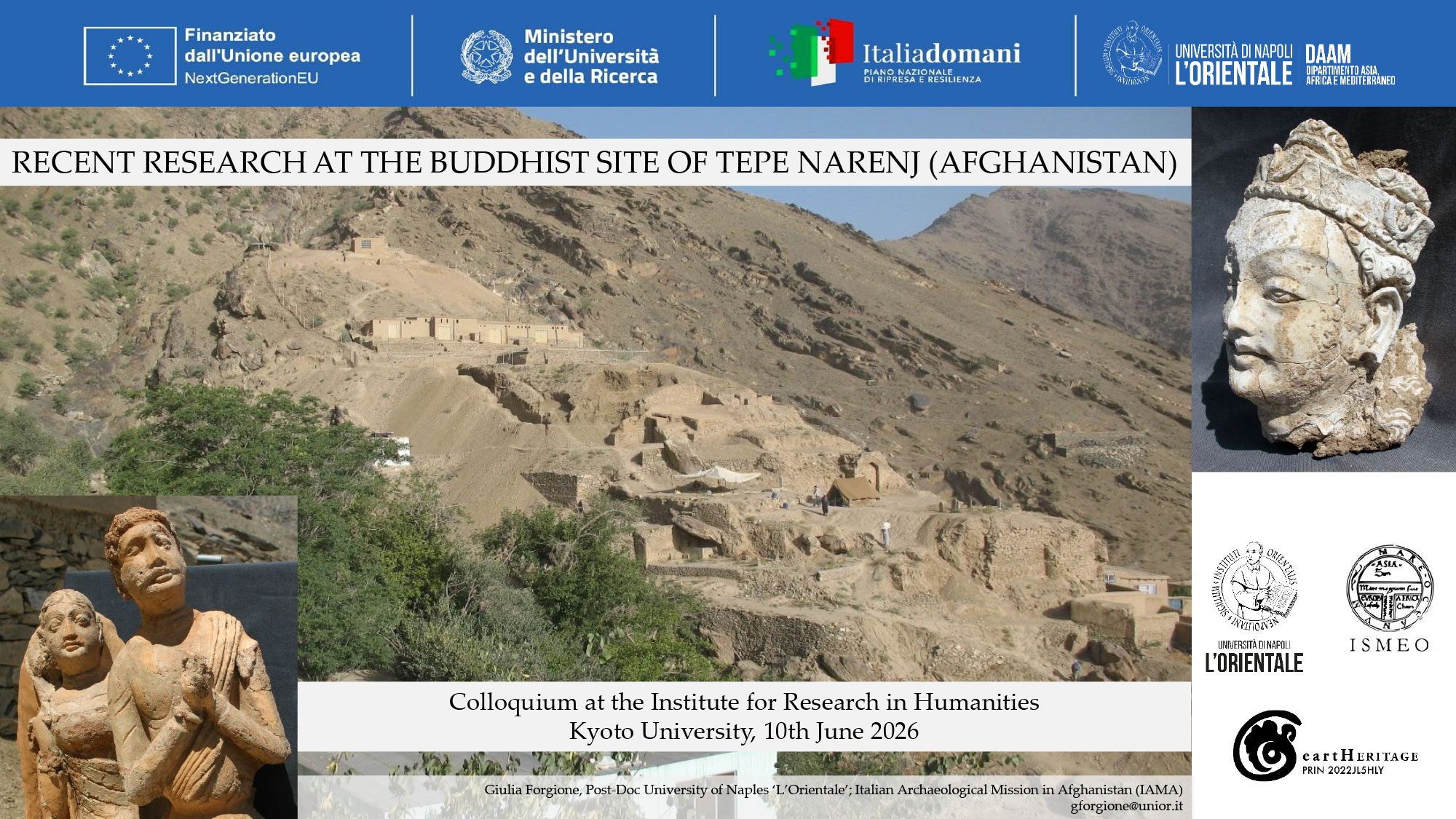
Abstract: This paper presents recent research on the Buddhist site of Tepe Narenj (Kabul region, Afghanistan), one of the most important excavated monastic complexes for the study of Late Antique Buddhism in the area. Excavated by the Archaeology Institute of Afghanistan under the direction of Zafar Paiman, the site preserves well-documented architectural remains, sculptures, and contexts dating between the 4th and 8th centuries CE. The presentation offers an overview of the archaeological documentation and the site’s contribution to the study of Buddhist material culture in the Kabul region. It also highlights how several technical and artistic features documented at Tepe Narenj are also found at other sites in Afghanistan and in later phases of Buddhist production, suggesting wider regional connections and continuities.