Abstract: In the Buddhist sculpture in earthen materials, plant-based elements such as straw, fibres, and small reeds were commonly employed, as attested by Sanskrit texts, and, albeit fragmentarily, by the archaeological evidence. Nevertheless, little is known about the relevant techniques, their variants, and the reasons underlying their application, particularly in regions such as Afghanistan.
This gap is due both to the still preliminary stage of research on clay-based sculpture and to the difficulty of sampling fragments in which the fibres, or at least their impressions within the paste, are still preserved. A necessary condition for observing the fibres with the naked eye is the presence of fractures or broken sections that provide access to the characteristics of the clay mixtures and to the internal structure of the sculpture. However, in many cases these fractures have been covered and stabilised during modern restorations, and the fragments no longer offer such an opportunity unless appropriate—and often costly—technologies are employed.
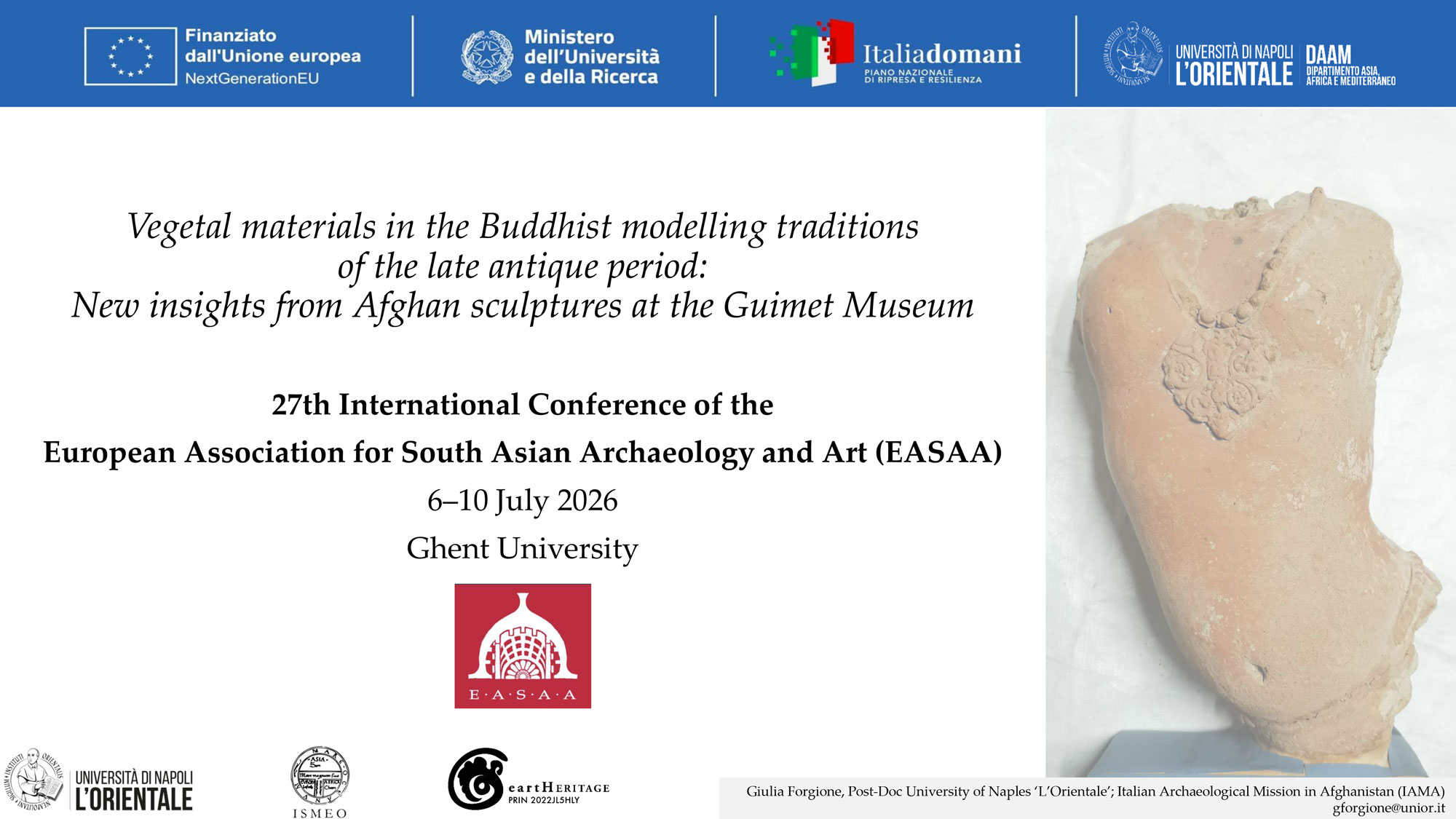
This study examines several fragmentary sculptures now kept at the Guimet Museum and originally excavated at sites such as Fondukistan and Bamiyan, which did not underwent such chemical/physical treatments, thus allowing for significant analytical insights. The results, supported by images taken with a portable microscope and compared with other productions, offer new perspectives on the methods and motivations underlying the use of vegetal fibres in Afghan sculpture from the 6th to the 7th–8th centuries CE.