eartHeritage – PRIN 2022JL5HLY

Object Information

Dandan Oiliq – D.5.10.3

General description

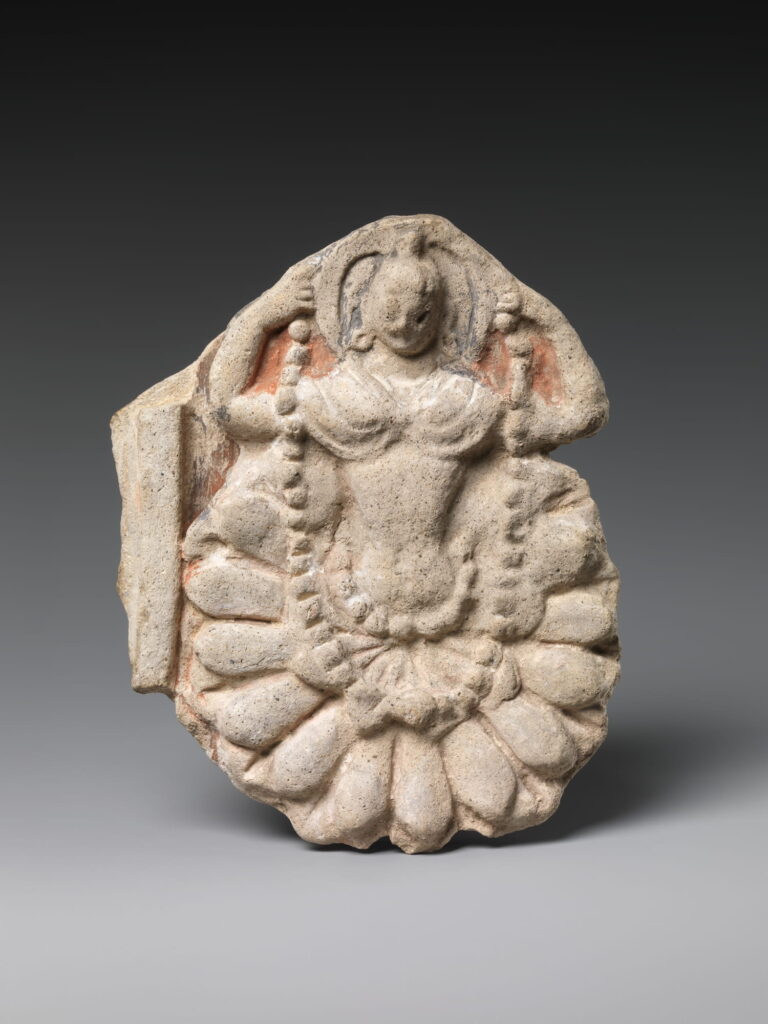
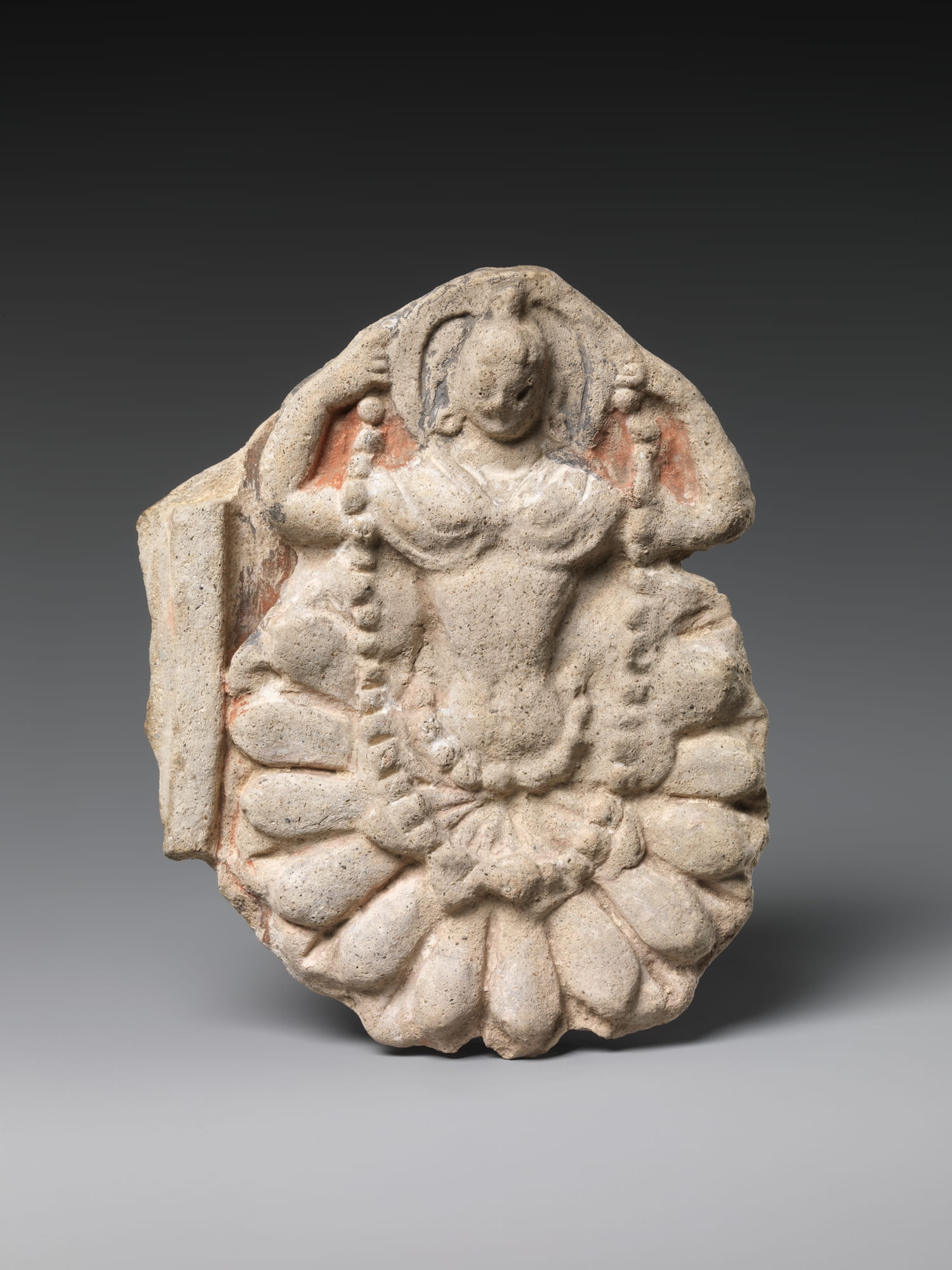
This small plaque once decorated the halo of a large sculpture. It displays an apsaras emerging from a full-blown lotus flower shown from above. She holds a long garland of pearls or beads in her raised hands, and her hair is arranged in a high topknot. The figure wears a garment over her chest, exposing her belly. Her head is surrounded by a halo with a plain border. To the viewer’s left, the remains of a plain vertical frame can be seen.  

Measures: H: 17; L: 13.5; W: 2.5 cm ca.
Excavation

Actor: Emil Trinkler’s German Central Asian Expedition, 1927–1928 A state-supported German scientific expedition to Central Asia aimed at studying and researching geography, geology, climate, archaeology, and ethnography, with a particular focus on the Taklamakan Desert and the surrounding oasis regions of the Tarim Basin (Xinjiang, northwestern China).

Current location

The Metropolitan Museum of Art, acc. no. 30.32.42

Technical data

This stucco plaque was made using a mould and then finished by engraving. Excavations at the site have brought to light many other plaques made with the same mould, albeit with different details — for instance, D.5.10.1 and D.T.02, where the apsaras is fully covered by a garment, with the drapery rendered in conventional, densely incised lines. Traces of the original polychromy remain on the nimbus, with scant black or dark blue paint, and in the background, where large patches of red are still visible. 

Data Object

Form of acquisition

Archaeological excavation

Location

Dandan Oiliq

Area/findspot

Year

1928

Cultural context

Buddhist

Historical period

Khotan Kingdom

Chronology

6th–7th century CE

Measures

H: 17; L: 13.5; W: 2.5 cm ca.

Bibliography

Gropp, G. (1974) Archäologische Funde aus Khotan, Chinesisch-Ostturkestan: Die Trinkler-Sammlung im Übersee-Museum, Bremen. Bremen: 286, D.5.10.3.

Gallery

Other objects from this site