Dandan Oiliq is a historic oasis city and Buddhist centre located on the southern edge of the Tarim Basin, between the Hetian River and the Keriya River, on the southern branch of the ancient Silk Road.
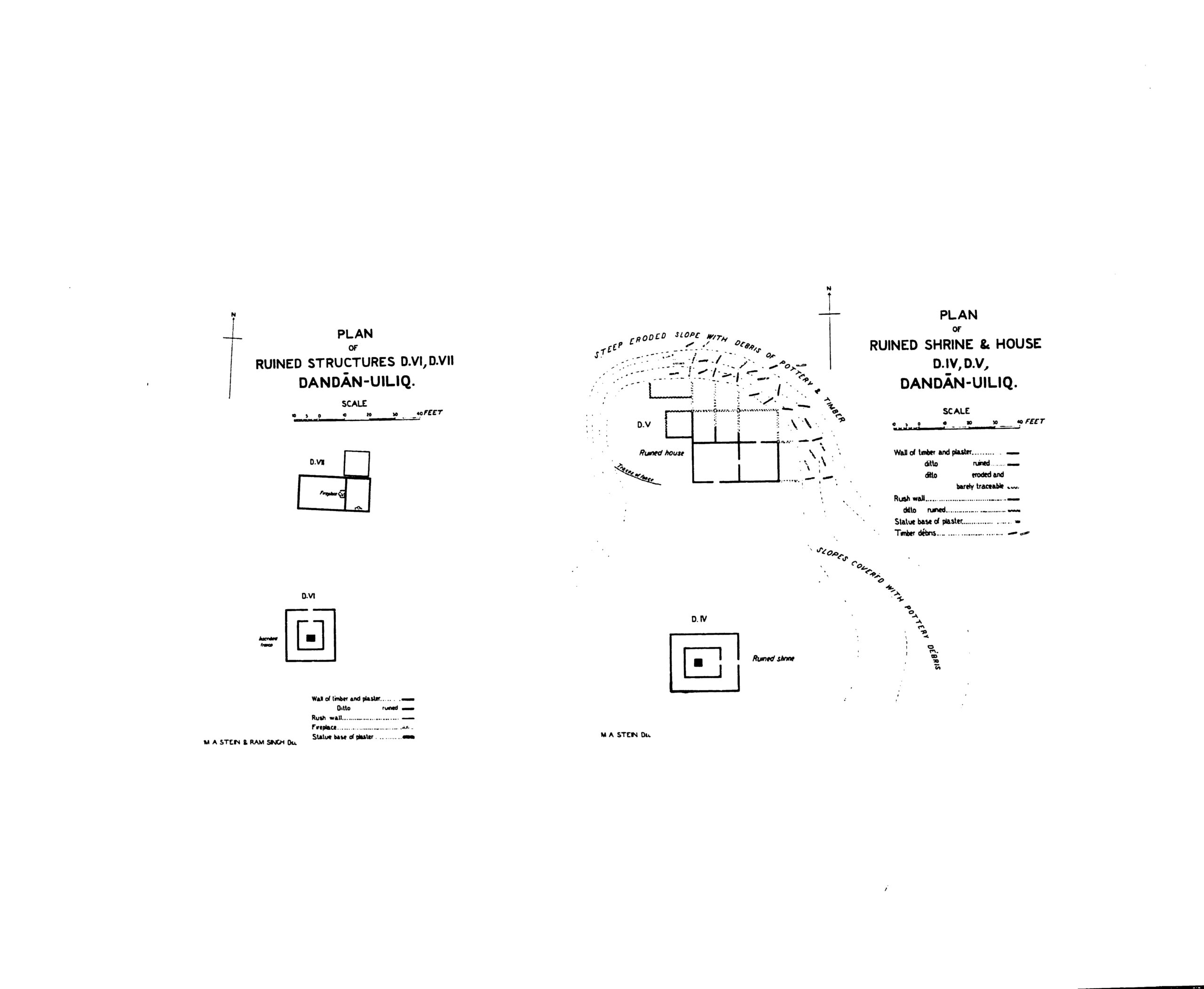
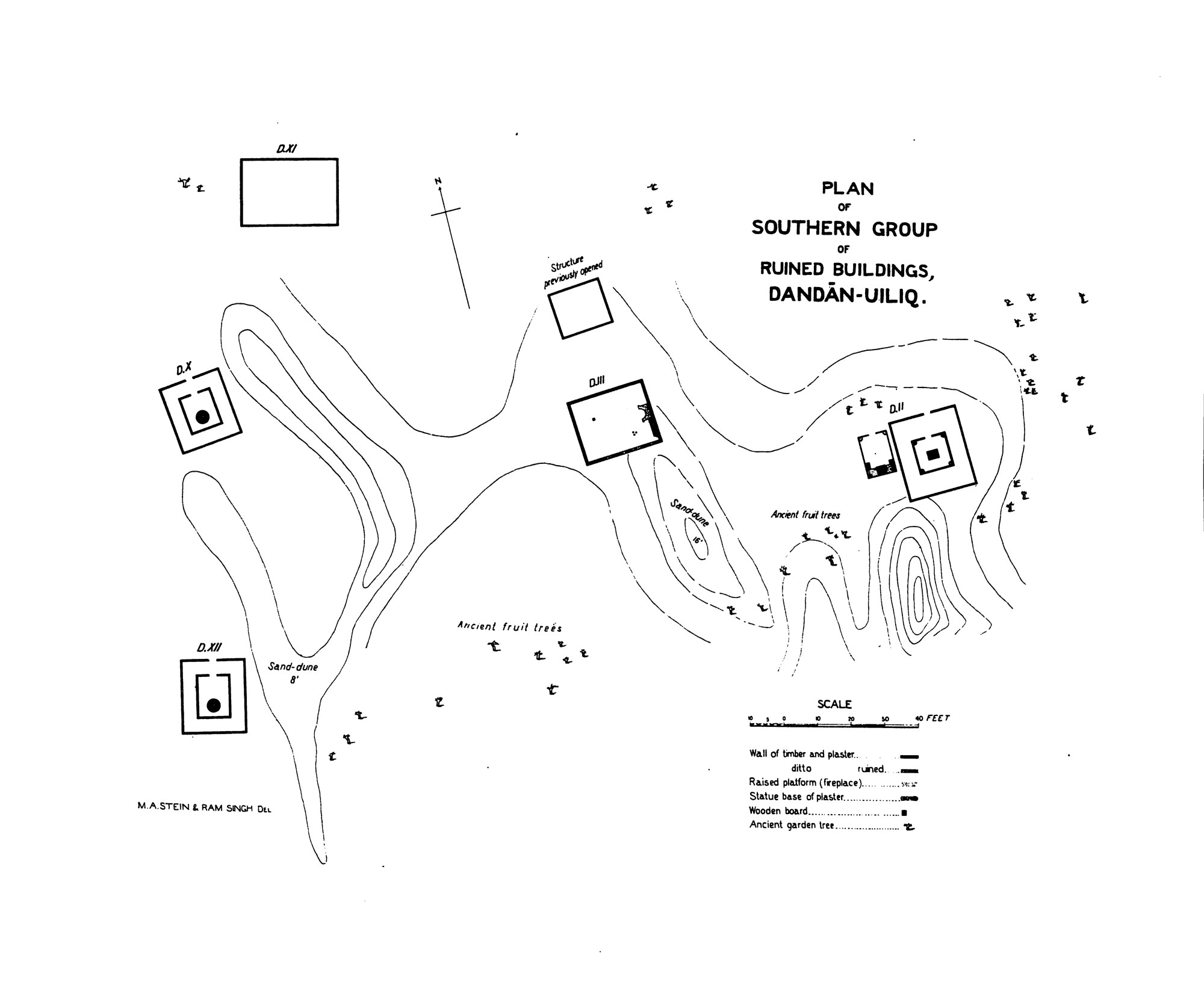
The site was discovered by Swedish explorer Sven Anders Hedin in 1896, during an expedition across the Taklamakan Desert. Following his record, Hungarian-born British archaeologist Sir Marc Aurel Stein undertook the first excavations in 1900–1901, uncovering several buildings, mostly Buddhist shrines (D.I, D.II, D.IV, D.VI, D.VIII, D.X, D.XII, D.XIV, D.XV, D.XVI, and D.XVII). After a brief visit by American geographer Ellsworth Huntington in 1906, German explorer Emil Trinkler carried out a new archaeological excavation in 1928. He discovered four additional buildings, including a Buddhist shrine (A.4.2). In 1932, Erik Norin and Nils Ambolt, directors of a Sino-Swedish expedition, collected several manuscripts at the site. In 1988, Swiss explorer Christoph Baumer made informal excavations in two Buddhist shrines (D.13 and D.10), which had probably already been investigated by Stein. Between 2002 and 2006, a joint Sino-Japanese archaeological mission, led by the Xinjiang Archaeological Research Institute, the Xinjiang Cultural Relics Bureau, and the Niya Research Institute of the Bukkyo University (Kyoto, Japan), carried out new excavations and a systematic survey of 70 sites located within an area of approximately 100 km2. In addition to residential units, kilns, and orchids, 15 Buddhist shrines were documented, including previously known structures and a new one (CD4). In 2006, the National Cultural Heritage Administration of China listed Dandan Oiliq as a national priority protected site due to its remarkable historical and cultural significance.
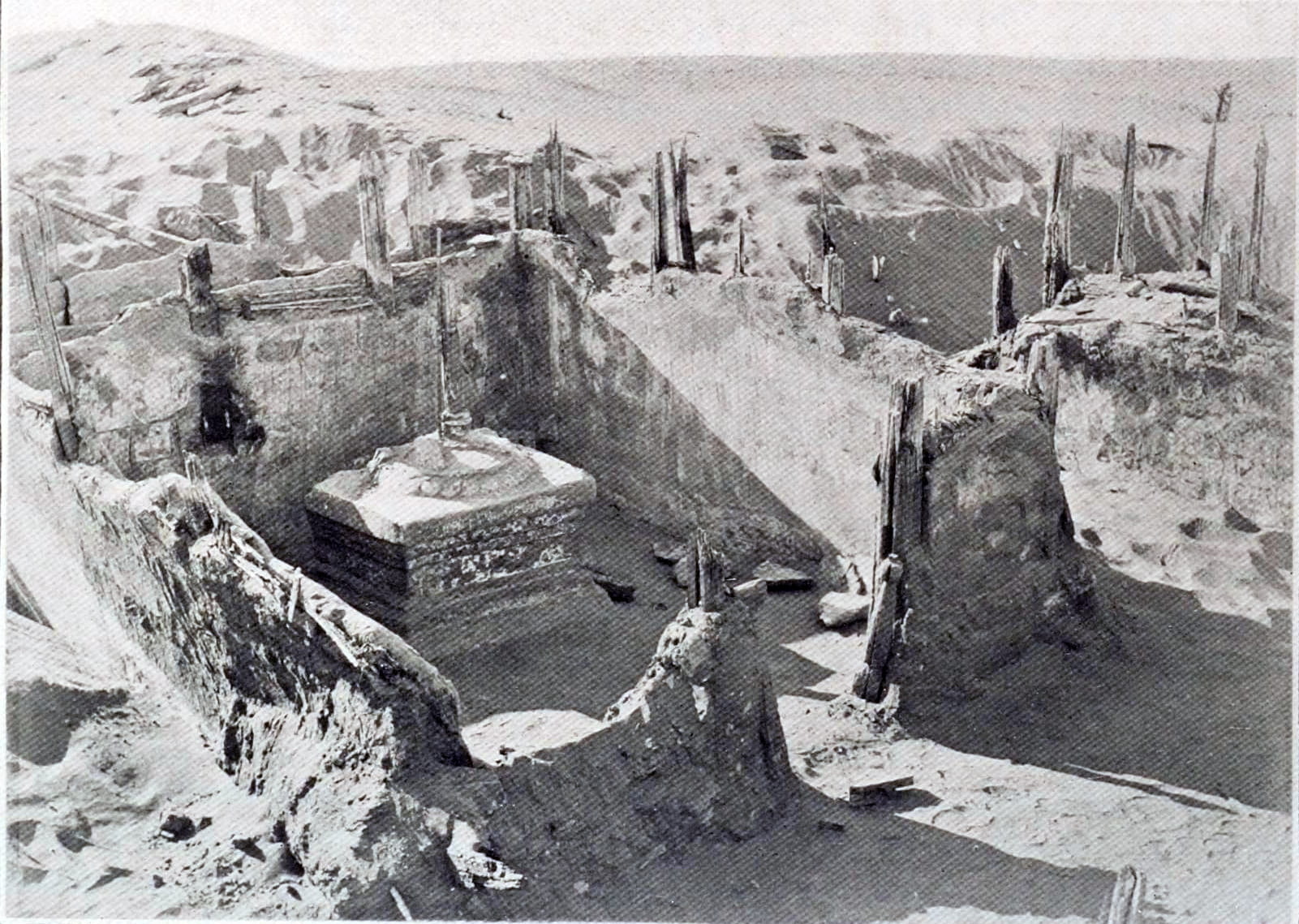
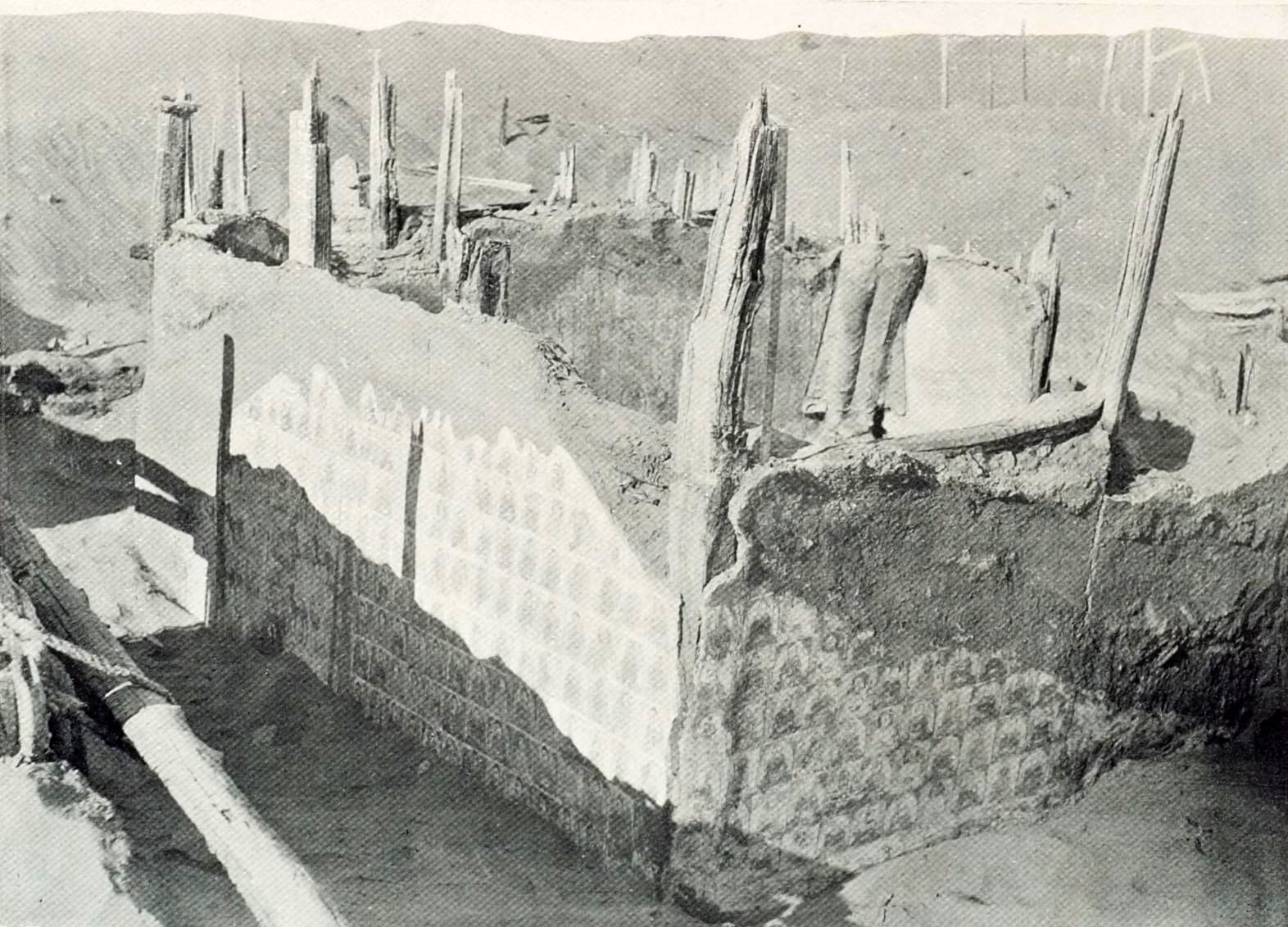
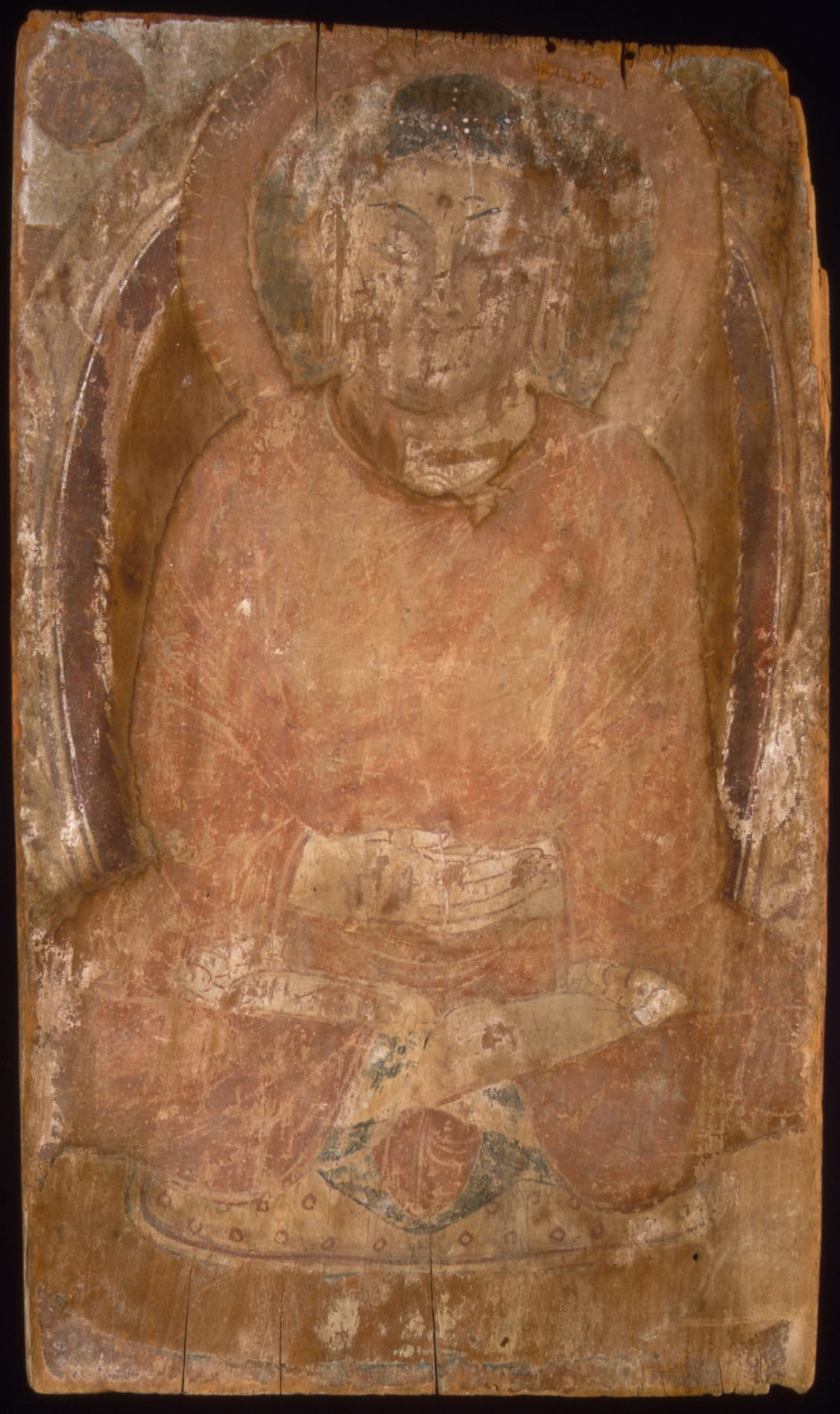
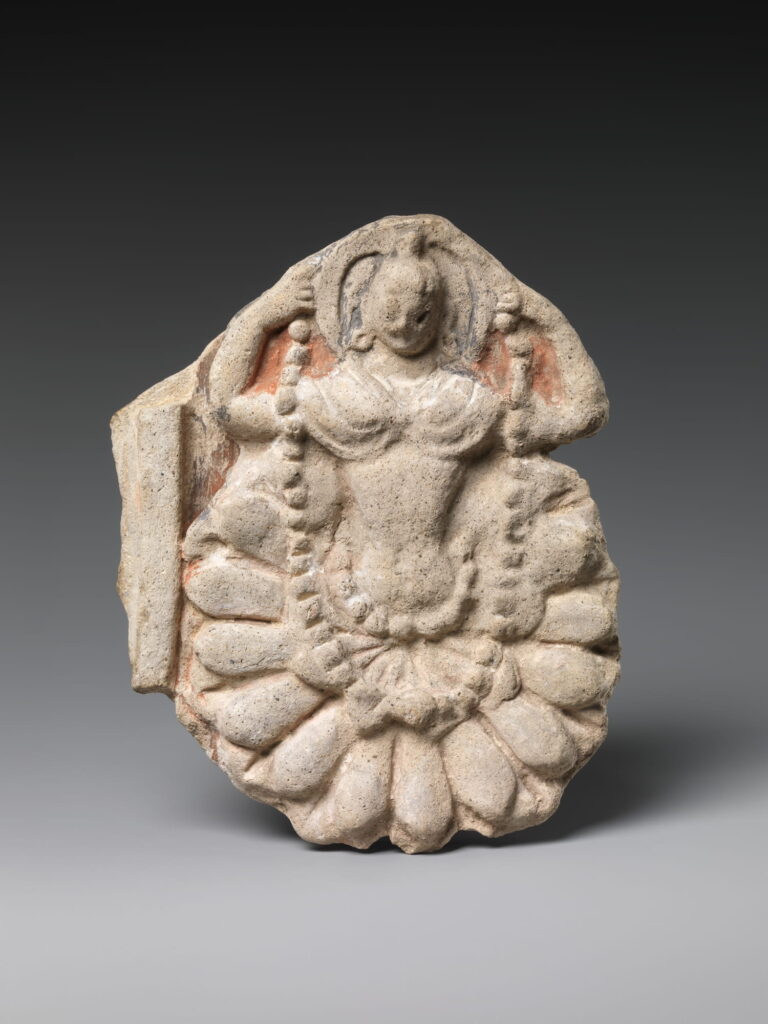
The Buddhist shrines are rectangular in plan and feature a central square cella, surrounded by a corridor for ritual circumambulation. The cella housed clay sculptures of buddhas and bodhisattvas, with one or more cult images placed on a high pedestal, and wall paintings depicting the same subjects, as well as lay donors, monks and deities. Several shrines also feature an outer rectangular enclosure, while others are found adjacent to or connected with residential structures, interpreted by some scholars as monastic dwellings. The superstructures and walls were built using wooden posts, with clay-covered reeds or woven mats making up the wall surfaces. Archaeological excavations carried out at the site since the 20th century have revealed an impressive assemblage of artefacts, now scattered among museums in China, India, Europe, and the United States. In addition to clay and stucco sculptures, architectural fragments and furniture pieces, and everyday objects, this assemblage includes wooden votive tablets painted with Buddhist images, Indian deities, and local legends, as well as numerous documents — both religious and administrative — written on various media in Khotanese, Indian, and Chinese, with the latter providing crucial evidence for dating the site.