
This is a clay cylindrical casket with a domed lid and an upward-extending knob. The body is adorned with a series of round plaques that imitate cabochon gems set in bezels, with smaller beads filling the remaining spaces. The preserved traces of gilding on the surface clearly demonstrate the desire of the artists and patrons to recreate a precious object. The custom of donating valuable reliquaries, which emphasised not only the donors’ generosity but also their social status, is widely attested in Buddhist tradition. A useful point of comparison is the famous reliquary of Bimaran.
Traces of figuration, possibly a hand, are visible at the bottom.
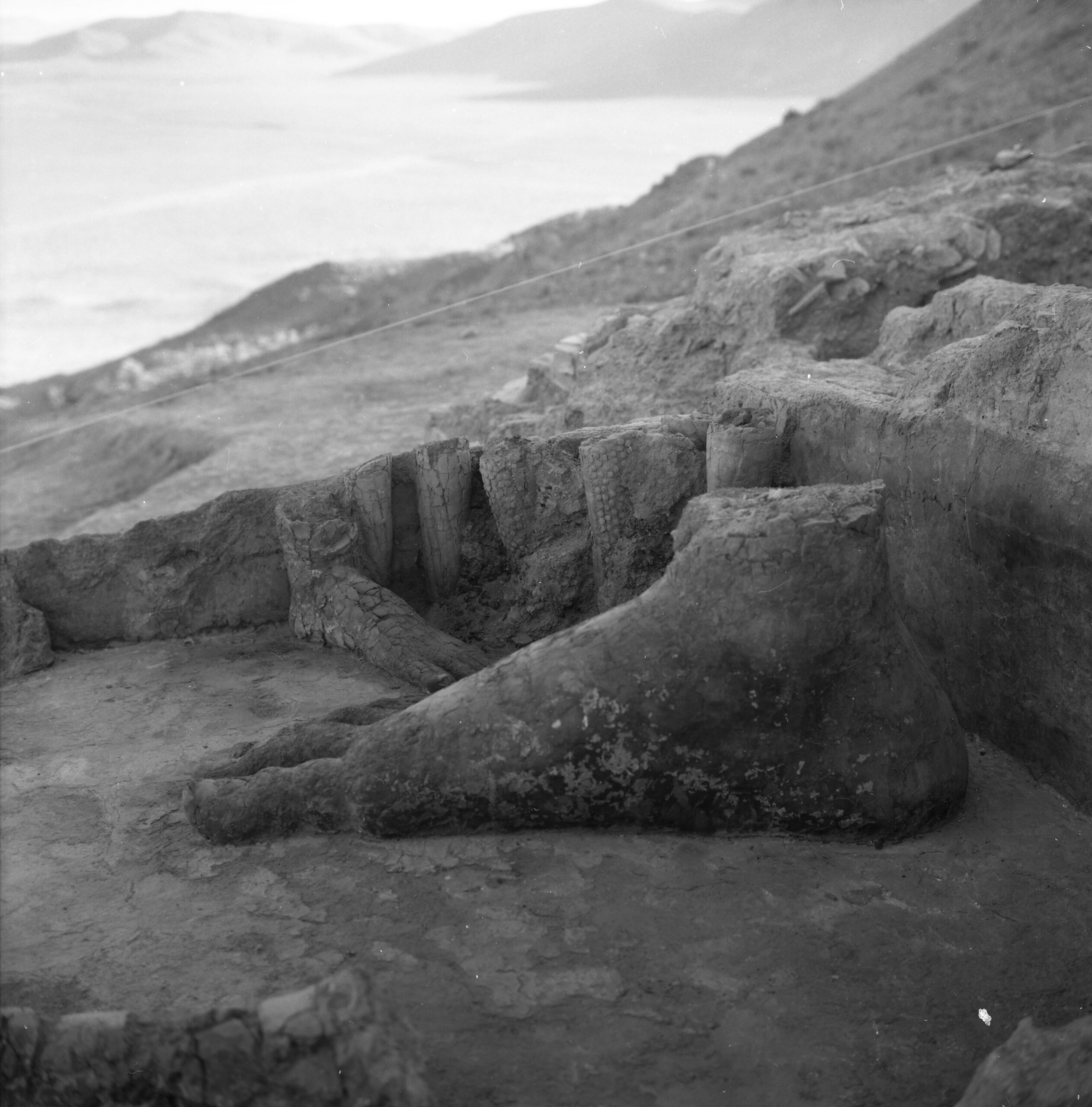
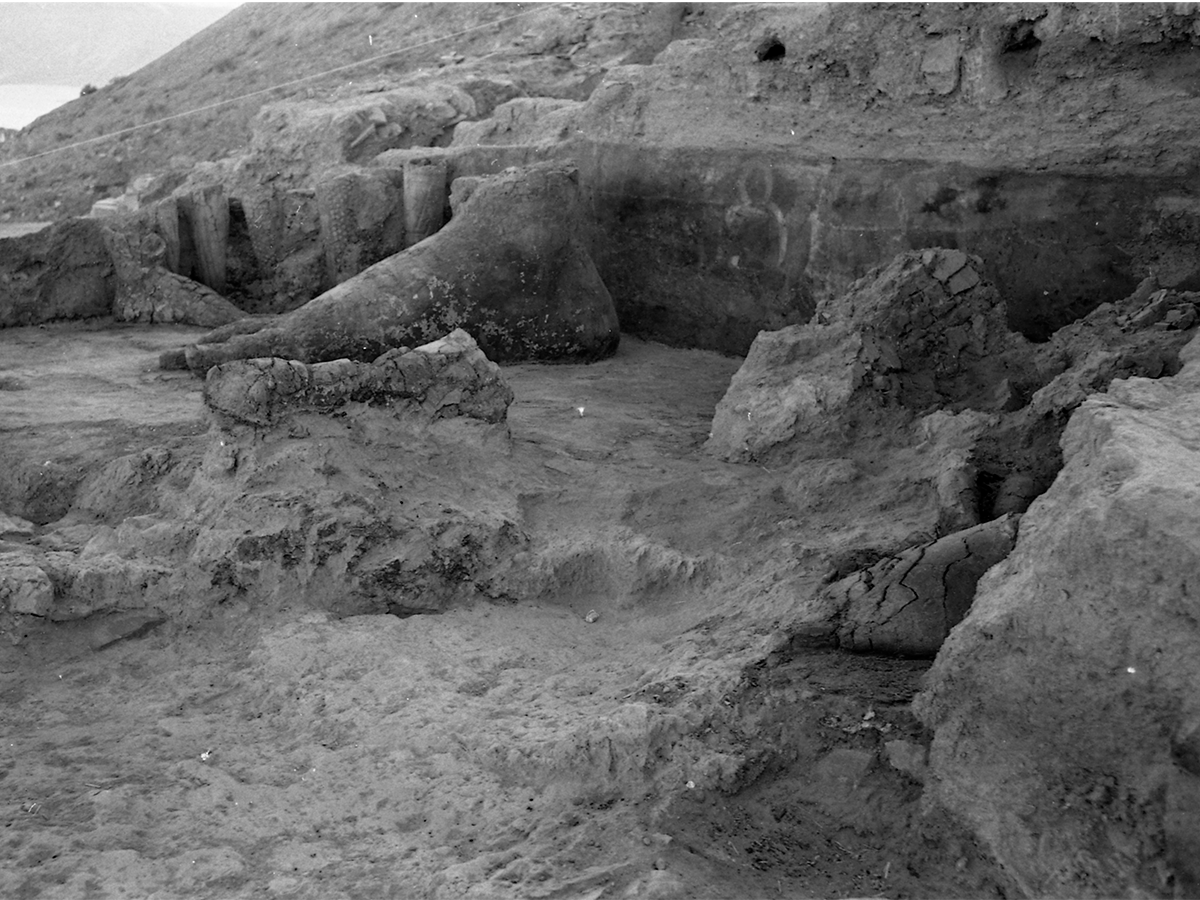
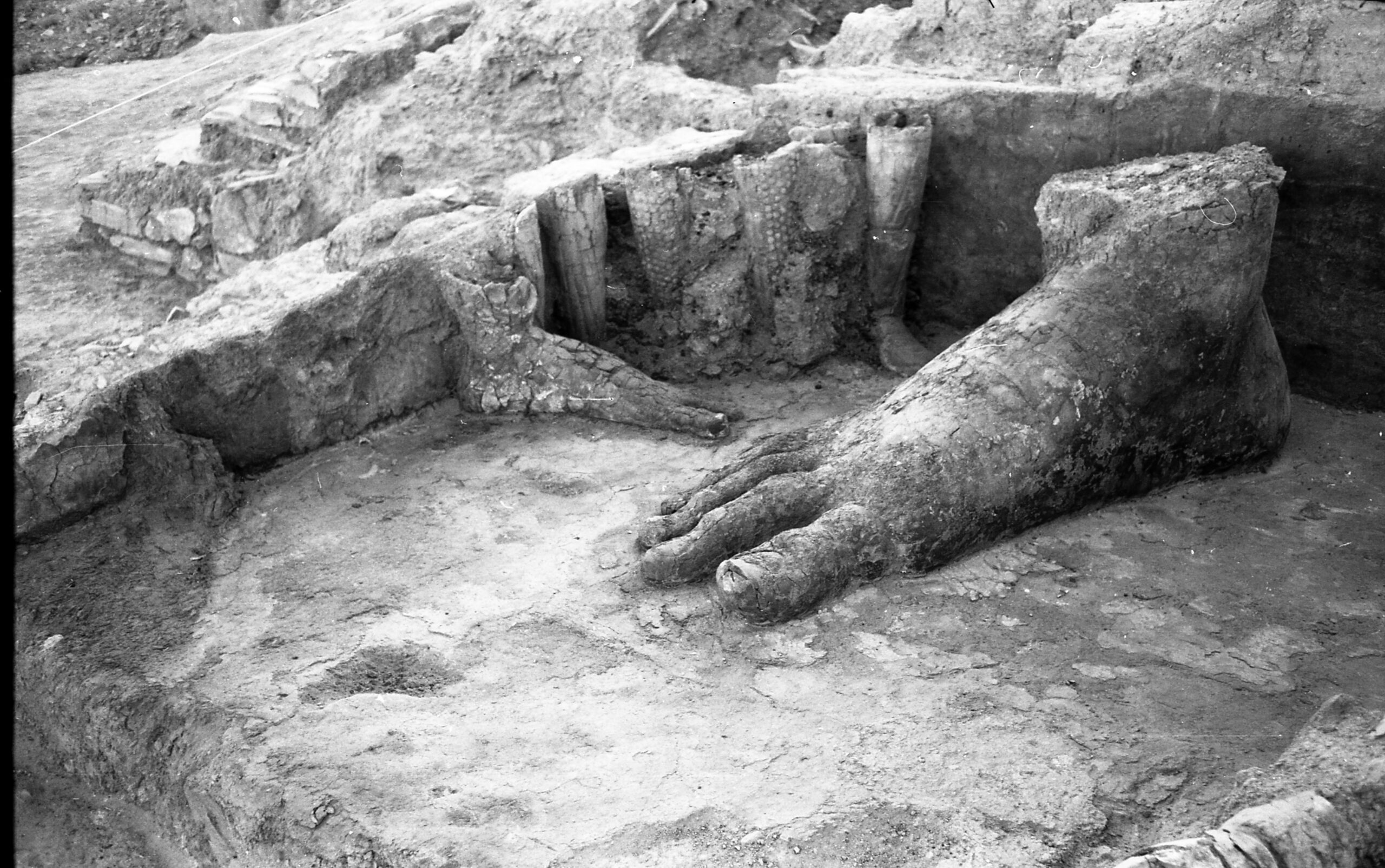
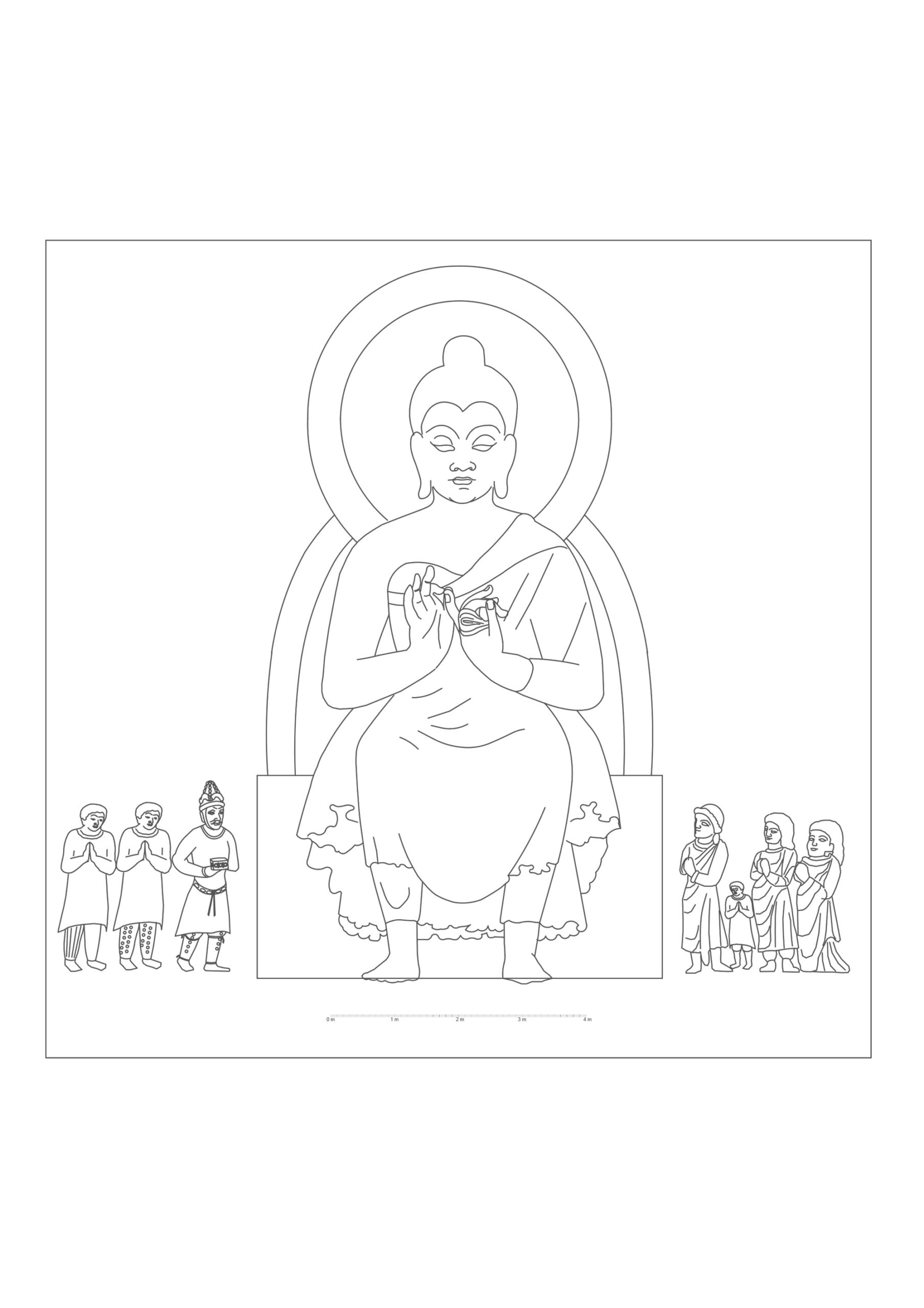
This casket comes from a large wall niche that once housed a monumental cult image of Maitreya, the Buddha of the Future, shown seated on a throne.
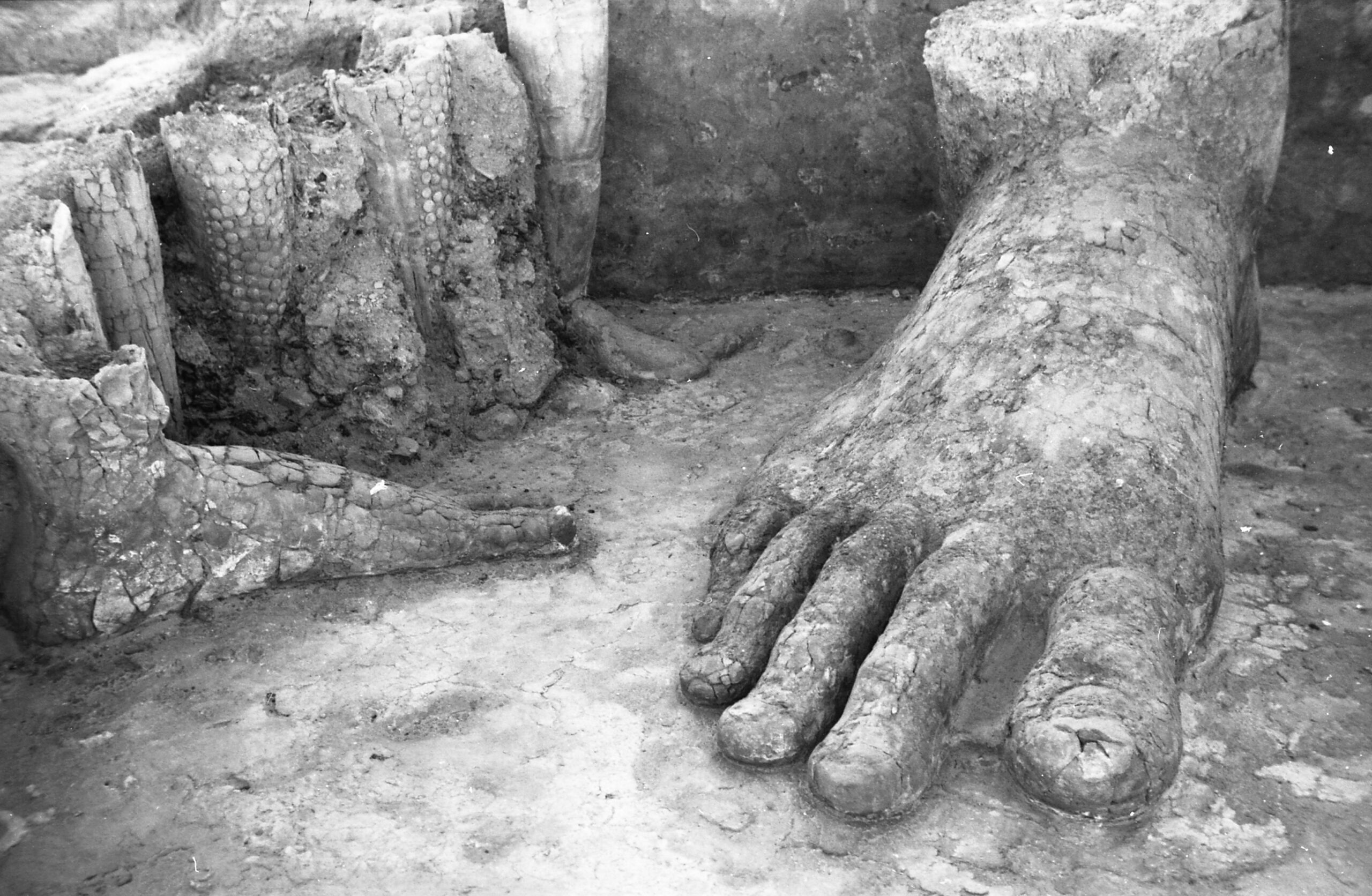
Of this colossal statue, only the right foot survives, measuring 1.60 metres in length and still bearing traces of gilding. Its scale and precious finish suggest that the niche was conceived as a powerful visual setting.
Maitreya was surrounded by other figures: two bodhisattvas and a family of lay donors. Small surviving details, such as the remains of the feet of a child, hint at the presence of this family group beside the Buddha.
Even in its fragmentary state, the niche allows us to imagine an elaborate and richly decorated display, designed to inspire devotion and convey the importance of the sacred image it once contained.
The casket was presumably held by the main donor figure who, together with his family, was depicted paying homage to Maitreya.