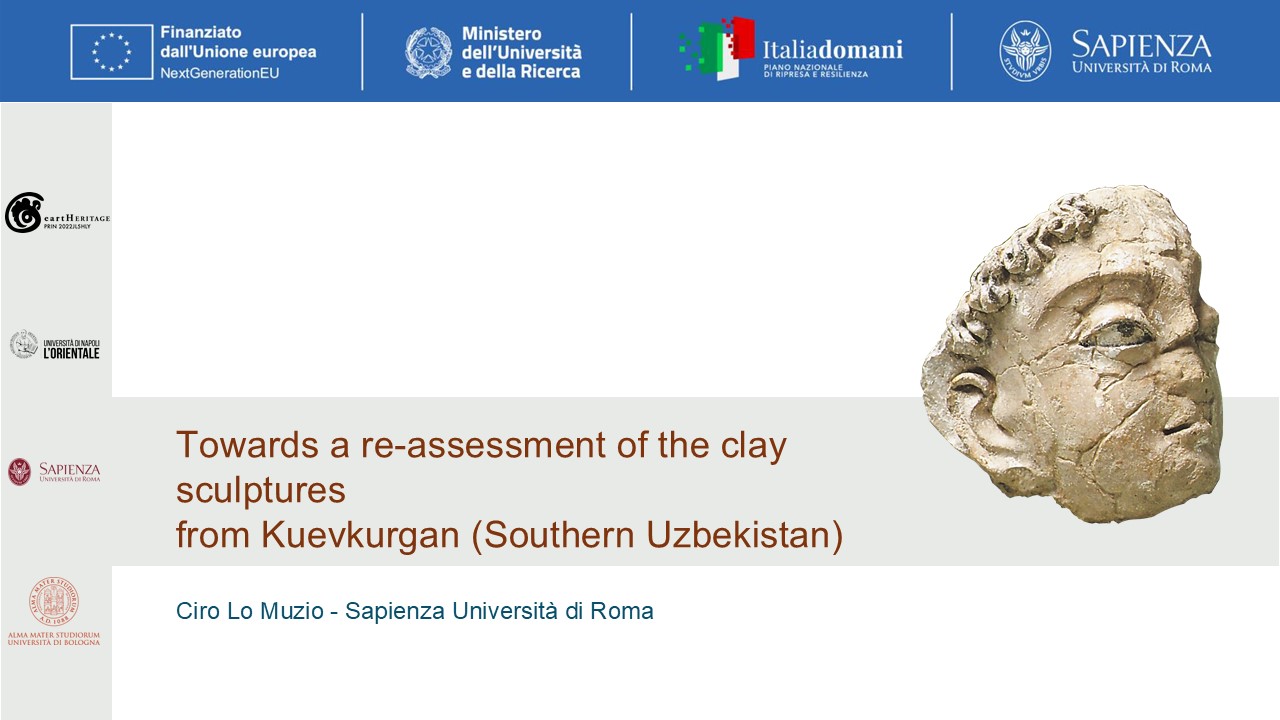
Abstract: This paper re-examines a series of clay sculptural fragments unearthed at Kuevkurgan, a rural residence in northern Tokharestan (present-day southern Uzbekistan), estimated to date from the mid-5th to mid-6th centuries. Following a description of the fragments and the archaeological context in which they were discovered, the paper re-examines previous interpretations of the sculptures and their architectural setting. While stylistic similarities with Gandharan Buddhist art were acknowledged, the idea that these sculptures belonged to a Buddhist context was firmly rejected in favour of interpretations linking them to the celebration of local political authority or dynastic ancestors. This study aims to re-evaluate these fragments by comparing them more closely with Buddhist clay sculptures from neighbouring regions, particularly those relating to, or influenced by, the late Gandharan or post-Gandharan tradition. The iconography, style and technical execution highlight significant similarities with unbaked clay sculptures from Tapa Sardar and other monastic centres to the south of the Hindu Kush, as well as from northern Tokharestan (Ajina Tepe). These similarities suggest that the Kuevkurgan sculptures should be considered part of the Buddhist artistic tradition and that they may date from a slightly later period than previously thought.