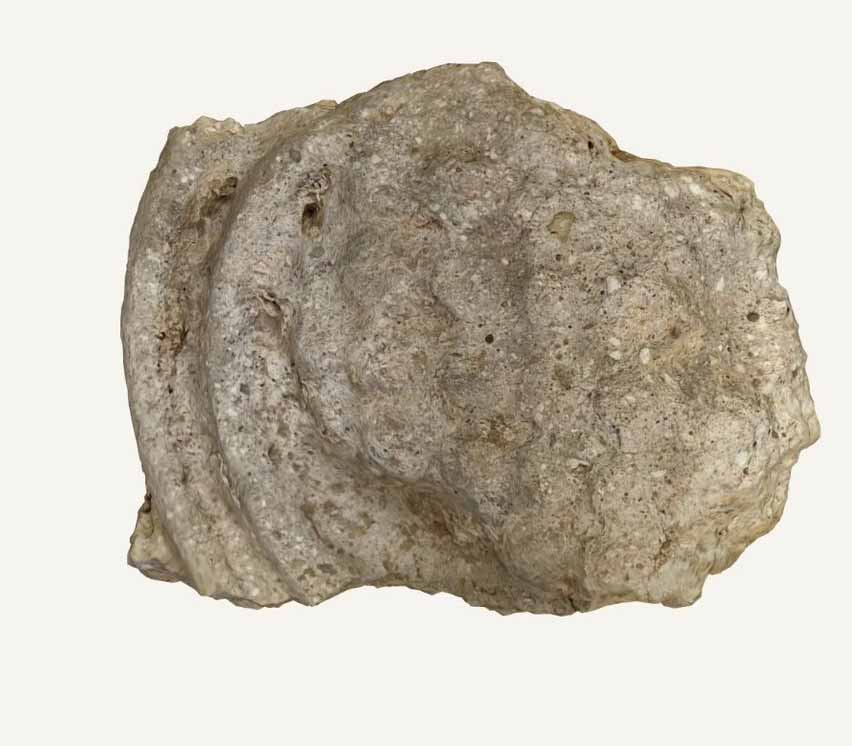
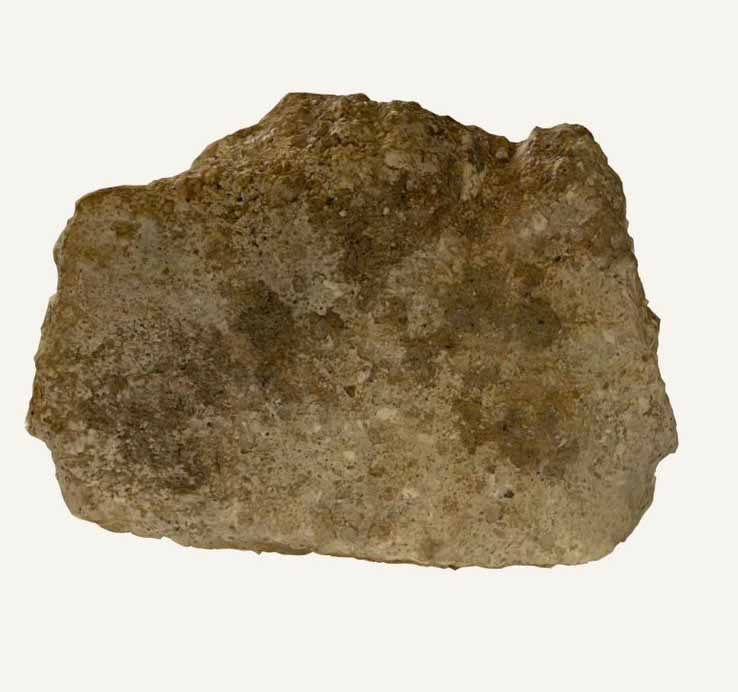
GT ST70566 preserves traces of probable vine scrolls formed by two thin curved bands in relief, approximately 1.5 cm wide. Within these bands are numerous globular elements measuring about 1.5 cm in diameter which, despite the fragmentary condition and poor preservation of the piece, can be identified as grape berries.
Motifs featuring grape clusters are well attested in both Sasanian and Islamic artistic traditions. The fragment finds close parallels among materials recovered from Kish, Chal Tarkhan, the latter dated to the Umayyad period, and Barz Qawaleh, as well as among decorated bricks discovered near Ctesiphon and Seleucia Tell ʿUmar, which are generally dated between the Late Parthian and Early Sasanian periods.
Of particular interest are comparisons with Christian contexts in the Persian Gulf region, including Sir Bani Yas and Jubail. These examples may indicate not only the persistence of this decorative motif into the post-Sasanian period, but also its circulation across a broad geographical area and, potentially, between different cultural traditions.