eartHeritage – PRIN 2022JL5HLY

Object Information

Gawr Tepe Object 2

General description

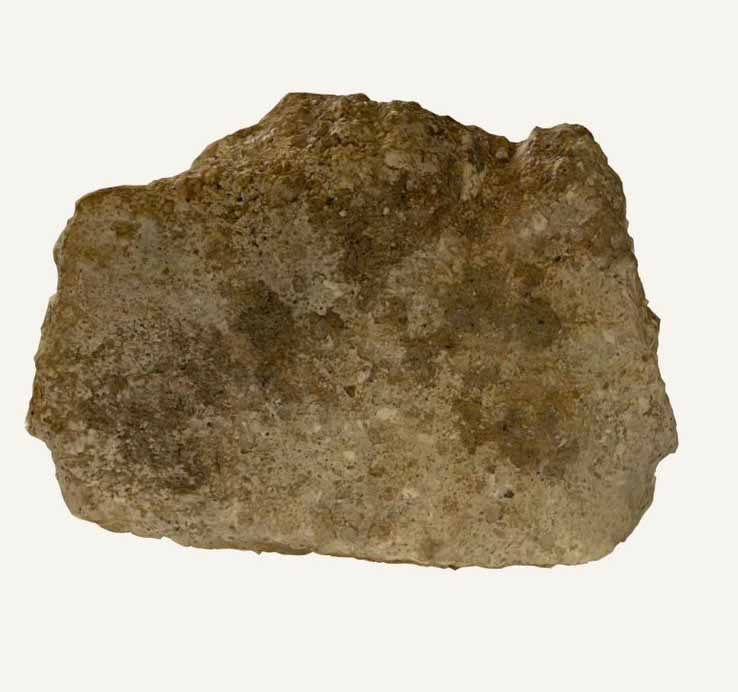
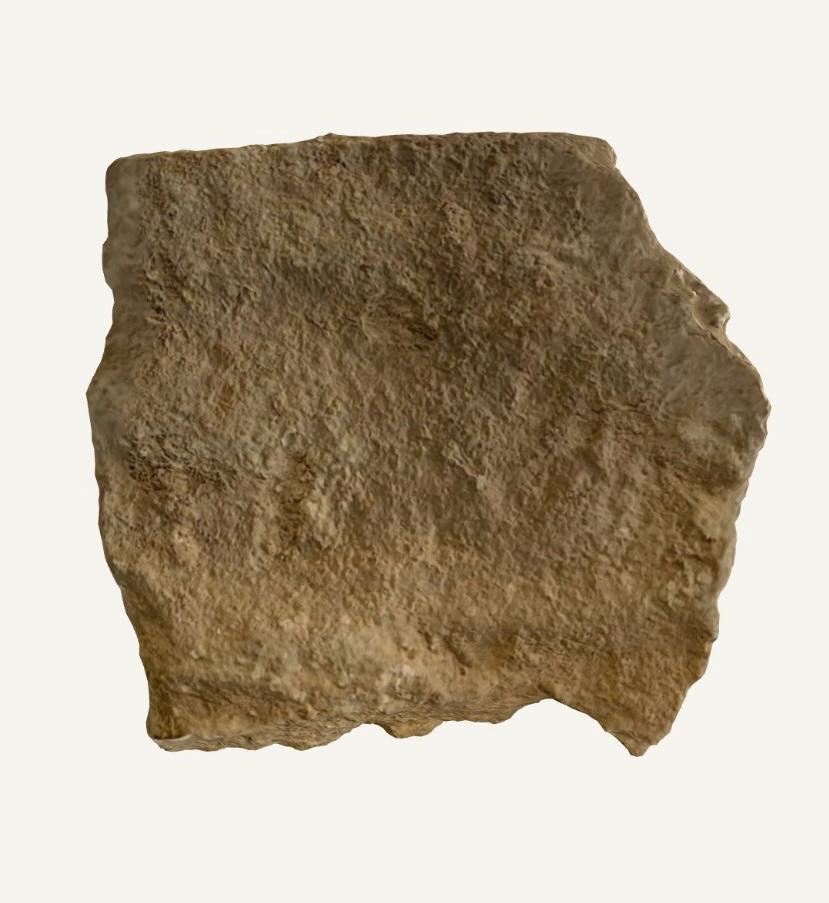
Fragment GT ST70571, discovered in 2023, probably formed part of a circular medallion. The fragment preserves a double row of pearls, approximately 1.5 cm in diameter, enclosed between two borders of different widths, the outer measuring about 2 cm and the inner about 1 cm. Within the inner border is an element that was initially interpreted, partly on the basis of comparison with a fragment from the nearby palace complex of Hawsh Kurw, as a possible separator of uncertain function. However, discoveries made during the 2024 excavation season, have led to a reassessment of this interpretation. These elements are now understood as the remains of radial motifs composed of single and double lines, probably belonging to circular medallions. The motif is most likely vegetal in character, although a solar interpretation cannot yet be entirely excluded. It is also plausible that the centre of the composition originally contained a figural image, as suggested by broadly comparable, though not exact, parallels from Barz Qawaleh and Jiljilak. 
Excavation

Actor: MiSAK (Italian Historical Archaeological Mission in Kurdistan), Gawr Tepe Project, 2023–present An Italian archaeological research project conducted by MiSAK (Italian Historical Archaeological Mission in Kurdistan), dedicated to the investigation, excavation, conservation, and enhancement of Gawr Tepe, a major Sasanian and Islamic-period settlement in the Garmian region of Iraqi Kurdistan. The project combines archaeological excavation, topographic and geophysical surveys, architectural studies, material culture analysis, and heritage preservation to investigate the site’s long-term occupation, its monumental Sasanian palace, and its role within the historical networks connecting Mesopotamia and the Iranian Plateau.

Current location

Garmian Civilization Museum, Kalar, KRI, Iraq

Technical data

This stucco fragment was probably produced using a mould and subsequently refined by engraving. Likely belonging to a medallion, it preserves a double row of beads enclosed between two moulded cornices of different widths. The decorative scheme finds close parallels in Sasanian stucco art.

Data Object

Form of acquisition

Archaeological excavation

Location

Gawr Tepe

Area/findspot

Gawr Tepe A

Year

2023

Cultural context

Sasanian

Historical period

Sasanian

Chronology

6th–7th century CE

Measures

L: 7.7 cm; W: 8 cm; H: 3.8 cm

Bibliography

Colliva, L., Mancini, S. and Sameen, S.M. (2023) ‘Gawr Tepe: A New MiSAK Project in Iraqi Kurdistan’, East and West, 63(2), pp. 25–45.

Colliva, L., and S. Mancini. Forthcoming a. “Stucco Productions from Gawr Tepe (KRI, Iraq). Preliminary Results of a MiSAK-eartHeritage Multidisciplinary and Comparative Study.” In Connecting Stucco from the Mediterranean to Central Asia: Methodological Approaches and the State of Research.

Colliva, L., and S. Mancini. Forthcoming b. “Gli stucchi del complesso palaziale di Gawr Tepe (KRI, Iraq). Le campagne MiSAK 2023–2025.” In Studi Iranici Ravennati.

Gallery

Other objects from this site